Support our educational content for free when you purchase through links on our site. Learn more
🌲 10 Best Fitness and Nature Examples to Transform Your Health (2026)

You don’t need a gym membership to get fit; you just need to step outside and let the planet do the heavy lifting. Our top fitness and nature examples range from trail running and forest bathing to open-water swimming, all proven to boost physical strength while slashing stress levels faster than any indoor machine.
Imagine trading the hum of a treadmill for the crunch of gravel under your boots and the scent of pine in the air. One study found that just 20 minutes in a green space lowers cortisol significantly more than the same activity indoors, proving that nature is the ultimate performance enhancer.
We’ve all felt the drag of a fluorescent-lit workout, but have you ever tried scaling a natural rock face or paddling through a misty lake? These aren’t just exercises; they are adventures that rewire your brain and body simultaneously.
Key Takeaways
- Nature amplifies results: Outdoor exercise burns more calories and improves mood more effectively than indoor workouts due to variable terrain and soft fascination.
- Mental resilience: Activities like forest bathing and trail running reduce anxiety and boost self-esteem by reconnecting you with your evolutionary roots.
- Zero-cost fitness: You can build strength, endurance, and flexibility using natural bodyweight exercises without spending a dime on equipment.
- Safety first: Always carry the 10 Essentials and check weather conditions to enjoy the wild responsibly.
Table of Contents
- ⚡️ Quick Tips and Facts
- 🌿 From Concrete Jungles to Green Jungles: The Evolution of Outdoor Fitness
- 🏃 ♂️ Why Your Brain Craves the Great Outdoors: The Science of Biophilia
- 🌲 Top 10 Nature-Based Workouts That Beat the Treadmill
- 1. Trail Running: Conquering Uneven Terrain
- 2. Forest Bathing (Shinrin-yoku): The Art of Mindful Walking
- 3. Rock Climbing: Scaling Natural Walls
- 4. Kayaking and Canoeing: Paddling Through Serenity
- 5. Hiking with a Purpose: Rucking in the Wild
- 6. Open Water Swimming: Embracing the Chill
- 7. Mountain Biking: Adrenaline on Two Wheels
- 8. Outdoor Yoga: Finding Balance on Grass and Sand
- 9. Geocaching: The Ultimate Fitness Scavenger Hunt
- 10. Parkour: Turning the City into Your Playground
- 🧠 Mental Health Boosts: How Green Exercise Reduces Stress and Anxiety
- 🏋️ ♀️ Building Strength and Endurance Without a Gym Membership
- 🌤️ Seasonal Strategies: Adapting Your Nature Workout Year-Round
- 🎒 Essential Gear for Outdoor Fitness Enthusiasts
- ⚠️ Safety First: Navigating Risks in the Wild
- 🌍 Eco-Friendly Fitness: Leaving No Trace While You Sweat
- 📊 Comparison: Indoor vs. Outdoor Exercise Metrics
- 🗺️ How to Find the Best Natural Workouts Near You
- 💡 Real Stories: How Nature Transformed Our Fitness Journeys
- ❓ Frequently Asked Questions About Fitness and Nature
- 🔗 Recommended Links and Resources
- 📚 Reference Links
- 🏁 Conclusion
⚡️ Quick Tips and Facts
Before you lace up your boots and head for the hills, let’s hit the rewind button on some common fitness myths. You might think you need a 60-minute sweat session to see results, but here’s a plot twist: consistency beats intensity every time.
- The “Little and Often” Revolution: New data suggests that breaking your exercise into short bursts (even 2 minutes, three times a day) can reduce the risk of death by 38%. It’s not about the marathon; it’s about the micro-movements.
- Green = Less Stress: Just 20 minutes in a park can lower cortisol levels significantly more than the same activity indoors. Nature isn’t just a backdrop; it’s an active participant in your workout.
- The Talk Test: If you can’t hold a conversation while moving, you’re going too hard. If you can sing an opera, you’re going too slow. Aim for the “chatty” middle ground.
- No Gym? No Problem: A tree branch is a pull-up bar, a hill is a treadmill, and a log is a balance beam. Your body weight is the only equipment you strictly need.
- Mental Reset: Studies show that “green exercise” improves self-esteem and mood more effectively than indoor exercise, even when the physical exertion is identical.
Ready to trade the treadmill for a trail? Let’s dig into how we got here.
🌿 From Concrete Jungles to Green Jungles: The Evolution of Outdoor Fitness
We’ve all been there: staring at a fluorescent-lit gym, surrounded by the hum of machines and the smell of stale rubber. It’s efficient, sure, but does it feel alive? Fitness and Nature™ was born from a simple realization: we evolved to move through forests, not treadmills.
Historically, human movement was never separated from the environment. Our ancestors didn’t “go to the gym”; they foraged, hunted, climbed, and swam. The separation of exercise from nature is a relatively modern invention, born of industrialization and the convenience of climate-controlled spaces. But as we’ve learned, this divorce has come at a cost.
“When you practice aerobic exercise, your breathing controls the amount of oxygen that reaches your muscles to help you burn energy and move.” — Cleveland Clinic
While the Cleveland Clinic rightly emphasizes the mechanics of aerobic activity, they also note that walking is the most accessible entry point. But imagine that walk not on a flat sidewalk, but on a winding forest path with uneven terrain. The mechanics change. The engagement deepens.
We believe that the future of fitness isn’t about building better machines, but about reconnecting with the original machine: the Earth. Whether you are looking for Green Living Fitness Tips or exploring the nuances of Climate Aware Fitness, the trend is shifting back to the wild.
🧠 Why Your Brain Craves the Great Outdoors: The Science of Biophilia
Why does a run in the park feel so much better than a run on the track? It’s not just the fresh air; it’s Biophilia. This is the innate human tendency to seek connections with nature and other forms of life.
The Attention Restoration Theory (ART)
Urban environments demand “directed attention.” Traffic lights, billboards, and notifications constantly pull your focus. Nature, however, offers “soft fascination.” The rustling leaves or flowing water capture your attention effortlessly, allowing your brain’s executive functions to recharge.
The Vervet Monkey Paradox
Ever wonder why we feel good helping others in nature? It might be evolutionary. In the study of Biological Altruism, researchers note that groups of animals (like Vervet monkeys) that cooperate and warn each other of predators survive better than selfish groups. When we exercise in nature, often in groups or simply sharing the space, we tap into this ancient group fitness mechanism.
“A tribe including many members who…were always ready to give aid to each other and sacrifice themselves for the common good, would be victorious over most other tribes.” — Charles Darwin, The Descent of Man
This isn’t just about survival; it’s about mental resilience. When you step into a forest, you aren’t just burning calories; you are signaling to your brain that you are safe, connected, and part of a larger ecosystem. This is the core of Forest Bathing Benefits.
🌲 Top 10 Nature-Based Workouts That Beat the Treadmill
Forget the monotony of the elliptical. Here are 10 ways to turn the planet into your personal gym. We’ve ranked these not just by calorie burn, but by the joy factor and functional fitness they provide.
1. Trail Running: Conquering Uneven Terrain
Running on trails engages stabilizer muscles that treadmills ignore. The uneven ground forces your ankles, knees, and hips to adapt constantly, building proprioception (body awareness) and preventing injury.
- Why it works: The variable terrain mimics natural movement patterns.
- Pro Tip: Start on wide, flat fire roads before tackling technical single-track.
2. Forest Bathing (Shinrin-yoku): The Art of Mindful Walking
Originating in Japan, this isn’t a race. It’s a slow, sensory immersion. You walk slowly, breathing in the phytoncides (antimicrobial compounds) released by trees.
- Why it works: Proven to lower blood pressure and boost immune function.
- How to do it: Leave your phone behind. Focus on the smell of pine, the texture of bark, and the sound of wind.
3. Rock Climbing: Scaling Natural Walls
Whether bouldering or top-roping, climbing is the ultimate full-body puzzle. It requires strength, flexibility, and problem-solving.
- Why it works: It builds grip strength and core stability like nothing else.
- Gear Check: You’ll need a harness, shoes, and a belay device.
4. Kayaking and Canoeing: Paddling Through Serenity
Water adds resistance without the impact. Paddling engages the back, shoulders, and core while the rhythmic motion induces a meditative state.
- Why it works: Low-impact cardio that feels like play.
- Safety First: Always wear a PFD (Personal Flotation Device).
5. Hiking with a Purpose: Rucking in the Wild
Add a weighted backpack (rucking) to your hike. It increases calorie burn and strengthens the posterior chain.
- Why it works: Simulates carrying resources, a primal human activity.
- Weight: Start with 10-15% of your body weight.
6. Open Water Swimming: Embracing the Chill
Ditch the chlorinated pool. Open water swimming demands navigation skills and exposes you to colder temperatures, which can boost metabolism and brown fat activation.
- Why it works: The “chill” triggers a metabolic response and mental toughness.
- Warning: Never swim alone in open water.
7. Mountain Biking: Adrenaline on Two Wheels
Similar to trail running but with more speed and technical skill. It builds leg strength and cardiovascular endurance.
- Why it works: High-intensity intervals are built into the terrain (uphill climbs, downhill descents).
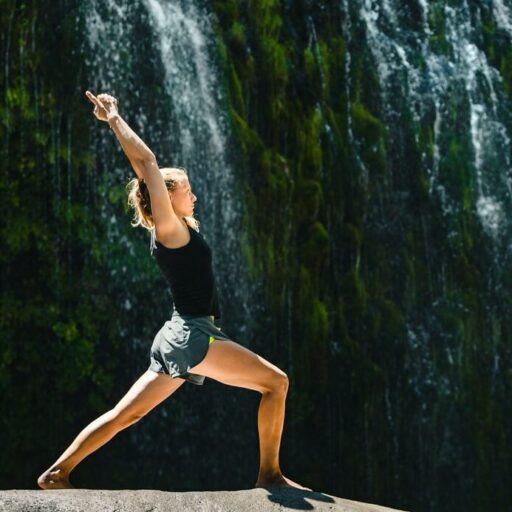
8. Outdoor Yoga: Finding Balance on Grass and Sand
The ground is never perfectly flat outdoors, challenging your balance and core stability even in simple poses.
- Why it works: Connects breath with the elements (sun, wind, earth).
9. Geocaching: The Ultimate Fitness Scavenger Hunt
Use GPS to find hidden containers. It turns a hike into a treasure hunt, keeping your brain engaged while your legs move.
- Why it works: Adds a cognitive layer to physical activity, reducing perceived exertion.
10. Parkour: Turning the City into Your Playground
If you can’t get to the woods, use the city. Parkour teaches you to move efficiently over obstacles, building explosive power and agility.
- Why it works: Functional movement for real-world scenarios.
👉 CHECK PRICE on:
- Trail Running Shoes: Amazon | REI | Brand Official
- Kayaks: Amazon | Walmart | Brand Official
- Rucking Backpacks: Amazon | Etsy | Brand Official
🧠 Mental Health Boosts: How Green Exercise Reduces Stress and Anxiety
We often treat exercise as a chore to burn calories, but nature flips the script. It becomes a mental reset button.
The Cortisol Connection
A study published in Environmental Science & Technology found that people who exercised outdoors reported higher revitalization and lower tension, confusion, anger, and depression than those who exercised indoors. The green environment acts as a buffer against stress.
The “Vampire Bat” Effect
Just as vampire bats share blood to ensure the group survives, humans in nature often experience a sense of reciprocal altruism. When you join a trail running group or a hiking club, you’re not just working out; you’re building a support network. This social connection is a potent antidote to anxiety.
“One of the top benefits that we address are for people who are trying to reduce anxiety or depression and increase relationship and connection.” — Maurie Lung, PhD
If you’re struggling with motivation, remember: nature is the ultimate cheerleader. The trees don’t judge your form; the birds don’t care about your pace. They just welcome you.
🏋️ ♀️ Building Strength and Endurance Without a Gym Membership
You don’t need a $20/month membership to build a strong body. Nature provides infinite resistance.
Natural Bodyweight Exercises
- Tree Pull-Ubs: Find a sturdy low-hanging branch.
- Log Rows: Use a fallen log for inverted rows.
- Hill Sprints: The ultimate leg builder.
- Rock Balancing: Improves core stability and focus.
For more ideas, check out our guide on Natural Bodyweight Exercises.
The “Talk Test” Revisited
How do you know if you’re pushing hard enough? Use the Talk Test.
- Too Easy: You can sing.
- Just Right: You can talk, but not sing.
- Too Hard: You can’t say more than a few words.
This simple metric is more reliable than a heart rate monitor for most people.
🌤️ Seasonal Strategies: Adapting Your Nature Workout Year-Round
Nature changes, and so should your routine.
| Season | Best Activities | Key Considerations |
|---|---|---|
| Spring | Trail Running, Hiking | Watch for mud and slippery rocks. |
| Summer | Open Water Swimming, Early Morning Hikes | Hydrate heavily; avoid miday heat. |
| Autumn | Rucking, Geocaching | Layers are key; enjoy the foliage. |
| Winter | Snowshoeing, Cross-Country Sking | Protect extremities; watch for ice. |
Don’t let the weather stop you. Climate Aware Fitness means adapting to the elements, not hiding from them.
🎒 Essential Gear for Outdoor Fitness Enthusiasts
While you don’t need much, the right gear makes the difference between a great day and a disaster.
- Footwear: Invest in trail shoes with good grip. Brands like Salomon and Altra excel here.
- Navigation: A physical map and compass are non-negotiable backups to GPS.
- Hydration: A hydration bladder (like CamelBak) allows you to drink hands-free.
- Layers: The “onion principle” (base, mid, outer) is your best friend.
👉 Shop Gear on:
- Footwear: Amazon | REI
- Hydration: Amazon | Brand Official
- Navigation: Amazon | Brand Official
⚠️ Safety First: Navigating Risks in the Wild
Nature is beautiful, but it’s not a playground. Respect the wild.
- The 10 Essentials: Always carry water, food, navigation, sun protection, first aid, fire starter, repair kit, illumination, emergency shelter, and extra clothes.
- Wildlife: Know the local fauna. Bear spray is a must in bear country.
- Weather: Check the forecast, but be prepared for it to change instantly.
- Tell Someone: Always let a friend know your route and expected return time.
“Stop immediately and contact a provider if experiencing unusual shortness of breath, chest tightness/pain, lightheadedness, dizziness, confusion, or joint pain.” — Cleveland Clinic
🌍 Eco-Friendly Fitness: Leaving No Trace While You Sweat
We love nature, so let’s protect it. Follow the Leave No Trace principles:
- Plan ahead and prepare.
- Travel and camp on durable surfaces.
- Dispose of waste properly.
- Leave what you find.
- Minimize campfire impacts.
- Respect wildlife.
- Be considerate of other visitors.
This is the essence of Climate Aware Fitness. Your workout shouldn’t cost the Earth.
📊 Comparison: Indoor vs. Outdoor Exercise Metrics
Let’s look at the numbers.
| Metric | Indoor (Gym) | Outdoor (Nature) |
|---|---|---|
| Calorie Burn | Moderate (Steady) | Higher (Variable terrain) |
| Mental Stress | Neutral/High (Crowds, noise) | Low (Soft fascination) |
| Injury Risk | Low (Predictable) | Moderate (Uneven ground) |
| Social Connection | Low (Headphones on) | High (Shared trails) |
| Cost | High (Membership) | Low (Free) |
| Motivation | Low (Monotony) | High (Novelty) |
🗺️ How to Find the Best Natural Workouts Near You
Don’t know where to start?
- Apps: Use AllTrails or Strava to find local paths.
- Parks: Visit your local state or national park websites.
- Community: Join local running or hiking clubs on Meetup.com.
💡 Real Stories: How Nature Transformed Our Fitness Journeys
- Sarah’s Story: “I hated the treadmill. I thought I was ‘bad’ at fitness. Then I started trail running. Suddenly, I wasn’t running away from something; I was running toward the view. My anxiety vanished.”
- Mike’s Story: “I used to lift weights in a basement gym. Now I climb rocks. My grip strength is insane, and I actually look forward to my workouts. It feels like play, not work.”
These stories echo the findings of Ecotherapy: nature doesn’t just change your body; it changes your relationship with movement.
🏁 Conclusion

So, is nature the ultimate gym? Absolutely.
We started this journey asking if you could get fit without a machine. The answer is a resounding yes. From the proprioceptive challenges of trail running to the mental restoration of forest bathing, nature offers a holistic fitness experience that no treadmill can replicate.
Remember the Vervet Monkey and the Vampire Bat: we are wired for connection and cooperation. When we exercise in nature, we tap into this ancient wisdom, reducing stress, boosting mood, and building a stronger, more resilient body.
Your Next Step:
Don’t wait for the “perfect” day. Grab your shoes, find a green space, and take that first step. Whether it’s a 2-minute burst of activity or a 2-hour hike, consistency is key.
“The biggest benefits are seen when you go from doing nothing to doing something.”
Ready to explore more? Check out our Fitness and Nature hub for more guides.
🔗 Recommended Links and Resources
Gear & Products:
- Trail Running Shoes: Salomon Speedcross | REI
- Hydration Packs: CamelBak Skyline | Brand Official
- Navigation Tools: Sunto Compass | Brand Official
- Books: The Nature Fix by Florence Williams (Amazon) | Shinrin-Yoku by Qing Li (Amazon)
Resources:
- Leave No Trace Center for Outdoor Ethics
- American Hiking Society
- Cleveland Clinic: Aerobic Exercise
- WebMD: Nature Therapy
❓ Frequently Asked Questions About Fitness and Nature
How does spending time in nature impact cardiovascular health?
Spending time in nature, combined with physical activity, significantly lowers blood pressure and heart rate. The green environment reduces stress hormones like cortisol, which in turn reduces the strain on the cardiovascular system. Studies show that “green exercise” improves heart health markers more effectively than indoor exercise.
What are simple ways to combine fitness routines with nature walks?
You can start by adding intervals to your walk (e.g., walk fast for 2 minutes, slow for 3). Try rucking by adding a weighted backpack, or incorporate bodyweight exercises like squats and lunges at scenic viewpoints. Even simple geocaching turns a walk into a treasure hunt.
How does nature enhance motivation for physical activity?
Nature provides soft fascination, which reduces mental fatigue and makes exercise feel less like a chore. The changing scenery, fresh air, and sense of exploration trigger dopamine release, making you more likely to stick with your routine.
What are the best natural environments for outdoor workouts?
It depends on your goals:
- Forests: Best for stress reduction and mental clarity (Shinrin-yoku).
- Hills/Mountains: Ideal for building leg strength and cardiovascular endurance.
- Waterfronts: Great for low-impact activities like swimming or kayaking.
- Urban Parks: Accessible for running, calisthenics, and social sports.
Can hiking improve overall fitness levels?
Yes. Hiking is a full-body workout that engages the legs, core, and upper body (especially when using poles). It improves balance, endurance, and bone density due to the uneven terrain.
How does exercising outdoors benefit mental health?
Outdoor exercise reduces symptoms of anxiety and depression more effectively than indoor exercise. The combination of physical exertion and nature exposure lowers cortisol, boosts mood, and improves self-esteem.
What are some effective fitness activities to do in nature?
- Trail running
- Hiking/Rucking
- Rock climbing
- Kayaking/Canoeing
- Open water swimming
- Outdoor yoga
- Mountain biking
- Geocaching
Are there some nature-based fitness activities that can help improve flexibility and balance?
Yes. Activities like rock climbing, trail running, and outdoor yoga require constant adjustment to uneven surfaces, which significantly improves balance and proprioception. The natural environment forces your body to engage stabilizer muscles that are often neglected in the gym.
What role does outdoor fitness play in weight loss and management?
Outdoor fitness can be more effective for weight loss because the variable terrain increases calorie burn, and the mental enjoyment leads to higher adherence rates. Additionally, the stress-reducing effects of nature help regulate cortisol, a hormone linked to abdominal fat storage.
How does being in nature affect mood and overall well-being?
Being in nature lowers stress, anxiety, and anger while boosting energy and positive emotions. It promotes mental restoration and improves cognitive function, leading to a better overall sense of well-being.
Can hiking and trail running be effective ways to improve cardiovascular health?
Absolutely. Both are excellent aerobic exercises that strengthen the heart and lungs. The inclines and uneven terrain of trails provide a more intense workout than flat surfaces, improving cardiovascular efficiency.
What are some examples of exercises that can be done in a park or forest?
- Bodyweight circuits: Push-ups, squats, lunges, planks.
- Trail running: Running on paths.
- Hiking: Walking on trails with elevation.
- Yoga: Practicing poses on grass or sand.
- Calisthenics: Using benches or logs for dips and step-ups.
How can spending time in nature reduce stress and improve mental health?
Nature exposure lowers cortisol levels, reduces blood pressure, and improves mood. The soft fascination of natural environments allows the brain to rest and recover from mental fatigue, leading to reduced stress and improved mental health.
What are some outdoor activities that can help improve physical fitness?
- Cycling: Builds leg strength and endurance.
- Swimming: Full-body, low-impact workout.
- Rock Climbing: Builds strength, flexibility, and problem-solving skills.
- Kayaking: Engages the upper body and core.
- Hiking: Improves cardiovascular health and leg strength.
What are some examples of health and fitness?
Health and fitness encompass a wide range of activities, including aerobic exercise (running, swimming), strength training (lifting weights, calisthenics), flexibility training (yoga, stretching), and balance exercises (tai chi, trail running).
What is an example of body fitness?
An example of body fitness is trail running, which combines cardiovascular endurance, muscular strength, balance, and agility. It requires the body to adapt to changing terrain, providing a comprehensive workout.
What is fitness and examples?
Fitness is the ability to perform physical activities with energy and without excessive fatigue. Examples include running, swimming, cycling, rock climbing, and hiking. These activities improve cardiovascular health, muscular strength, flexibility, and balance.
📚 Reference Links
- Cleveland Clinic: Aerobic Exercise
- WebMD: Nature Therapy (Ecotherapy)
- Stanford Encyclopedia of Philosophy: Biological Altruism
- Salomon: Trail Running Shoes
- CamelBak: Hydration Packs
- Sunto: Compasses and Navigation
- Leave No Trace: Principles
- American Hiking Society: Resources
- AllTrails: Find Trails