Support our educational content for free when you purchase through links on our site. Learn more
How Nature Shapes Physical Activity 🌿

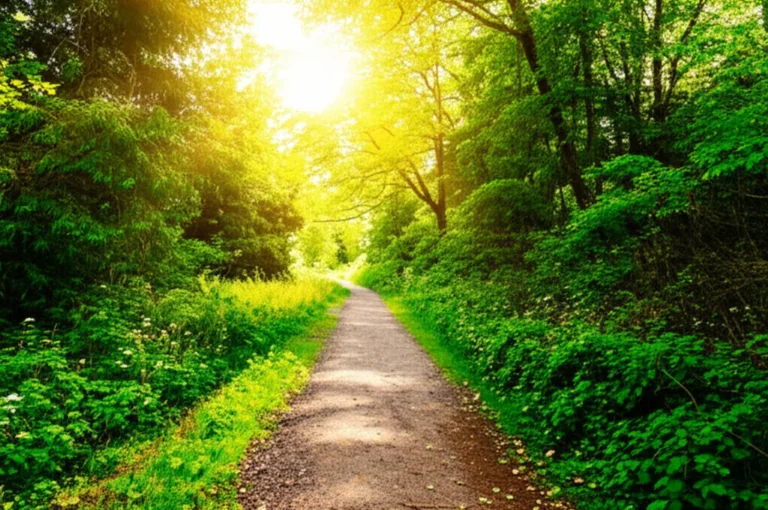
How does nature affect physical activity? Nature often makes movement more enjoyable, varied, and easier to repeat. Parks, forests, trails, beaches, and tree-lined streets can encourage longer walks, add natural challenges such as hills and uneven surfaces, and support mood, focus, and stress management.
The effect is not mystical—and trees cannot do your squats for you—but the setting can change how exercise feels. A scenic trail may distract you from effort, while a nearby greenway can turn an ordinary commute into regular cardio.
Research published in Scientific Reports found that people who spent at least two hours in nature during the previous week were more likely to report good health and well-being. That does not make two hours a magic prescription, but it does suggest that small, repeatable doses of nature may fit beautifully into a healthy routine.
We have seen this play out on local trails: someone who dislikes treadmill walking often continues beyond the planned 20 minutes outdoors because they want to reach the next bridge, viewpoint, or especially judgmental-looking squirrel. Enjoyment turns movement from a task into somewhere you want to return.
Key Takeaways
- Nature can increase exercise motivation by making physical activity more scenic, stimulating, and enjoyable.
- Green spaces encourage walking and active recreation by providing accessible routes, shade, destinations, and social opportunities.
- Trails and natural terrain build variety into workouts, challenging balance, coordination, stabilizing muscles, and cardiovascular fitness.
- Outdoor activity may support mental well-being through stress reduction, attention restoration, daylight exposure, and social connection.
- Weather and environmental conditions matter: heat, humidity, cold, storms, smoke, pollen, air pollution, and limited daylight can affect safety and performance.
- Outdoor exercise is not automatically better than indoor exercise. The strongest routine combines the setting that feels enjoyable, safe, accessible, and repeatable.
- Start small: a five- to 20-minute walk in a nearby park can be enough to begin building a sustainable nature-based fitness habit.
Table of Contents
- ⚡️ Quick Tips and Facts
- 🌿 What Does Nature Have to Do With Physical Activity?
- 🧭 The Science and History of Outdoor Exercise
- 🏃 ♀️ How Natural Environments Stimulate Physical Activity
- 🌳 Why Green Spaces Encourage More Movement
- 🌊 The Motivating Effect of Blue Spaces
- 🏔️ How Trails, Parks, and Landscapes Shape Exercise Choices
- 🐦 Nature, Curiosity, and Exercise Enjoyment
- 💪 12 Health Benefits of Being Active in Nature
- 1. Improves Heart Health and Cardiovascular Fitness
- 2. Supports Healthy Weight and Metabolic Health
- 3. Reduces Stress and Lowers Cortisol
- 4. Supports Mental Health and Emotional Well-Being
- 5. Enhances Cognitive Function and Focus
- 6. Promotes Better Sleep Quality
- 7. May Support Immune Function
- 8. Builds Muscular Strength, Balance, and Mobility
- 9. Increases Daily Steps and Moderate-to-Vigorous Activity
- 10. Strengthens Social Connection and Community Health
- 11. Encourages Long-Term Exercise Adherence
- 12. Supports Healthy Aging and Independence
- 🌤️ How Weather and Daylight Affect Outdoor Physical Activity
- ☀️ Temperature, Heat, and Humidity
- ❄️ Cold Weather, Snow, and Ice
- 🌧️ Rain, Wind, and Storm Conditions
- 🌅 Daylight, Seasonal Changes, and Circadian Rhythms
- 🌫️ Air Quality, Smoke, Pollen, and Pollution
- 🚶 ♂️ Which Outdoor Activities Benefit Most From Natural Settings?
- 🥾 Hiking, Trail Walking, and Nature Treking
- 🚲 Cycling and Mountain Biking
- 🏊 Swimming, Paddling, and Watersports
- 🧘 Outdoor Yoga, Tai Chi, and Mindful Movement
- 🏋️ Outdoor Strength Training and Calisthenics
- 🌲 Forest Bathing and Low-Intensity Nature Walks
- ⚽ Outdoor Sports, Play, and Active Recreation
- 👨 👩 👧 👦 How Nature Influences Physical Activity Across Age Groups
- 🧒 Children and Teenagers
- 🧑 💼 Adults With Busy Schedules
- 👵 Older Adults and Healthy Aging
- ♿ Accessibility, Disability, and Inclusive Outdoor Exercise
- 🏙️ Urban Nature, Green Infrastructure, and Active Living
- 🌳 Parks, Street Trees, and Pocket Gardens
- 🚶 Walkable Neighborhoods and Active Transportation
- 🏘️ Equity and Access to Safe Natural Spaces
- 🗺️ How to Find Nearby Trails, Parks, and Recreation Areas
- 🧠 Nature, Motivation, and Exercise Psychology
- ✅ Why Outdoor Exercise Can Feel Easier
- ✅ Intrinsic Motivation, Awe, and Restoration
- ❌ Common Bariers to Exercising Outdoors
- 📱 Technology, Fitness Apps, and Screen-Free Movement
- 🛡️ Outdoor Exercise Safety: Risks, Preparation, and Prevention
- 🦟 How to Prevent West Nile Virus and Insect Bites
- 🌞 Sun Exposure, Heat Illness, and Hydration
- 🐍 Wildlife, Plants, and Environmental Hazards
- 🧭 Navigation, Trail Etiquette, and Emergency Planning
- 👟 Footwear, Clothing, and Essential Outdoor Gear
- ❤️ When to Modify or Stop an Outdoor Workout
- 📅 How to Spend More Time Outdoors and Move More
- 1. Start With Short Nature Walks
- 2. Schedule Outdoor Activity Around Your Energy
- 3. Turn Errands Into Active Transportation
- 4. Build a Flexible Weather Backup Plan
- 5. Invite Friends, Family, or a Walking Group
- 6. Progress Gradually With the FIT Principle
- 7. Track Steps, Time, Mood, and Recovery
- 8. Make Nature a Regular Part of Your Routine
- 🏋️ Sample Outdoor Exercise Plans for Every Fitness Level
- 🌱 Beginner Plan: 20-Minute Park Walking Routine
- 🌿 Intermediate Plan: Trail Walking and Strength Circuit
- 🌲 Advanced Plan: Hiking, Hill Training, and Recovery
- ☔ Indoor Alternatives for Poor Weather
- 📊 Nature-Based Exercise Compared With Indoor Workouts
- ✅ Advantages of Exercising Outdoors
- ❌ Limitations and Situations Favoring Indoor Exercise
- ⚖️ How to Combine Indoor and Outdoor Training
- 🔬 What Research Says About Nature and Physical Activity
- 📚 Key Findings From Exercise, Public Health, and Environmental Studies
- 📏 Understanding Corelation, Causation, and Research Limits
- 🌍 Climate, Biodiversity, and the Future of Outdoor Exercise
- ❓ Frequently Asked Questions About Nature and Physical Activity
- 🎯 Take the Next Step Toward Nature-Based Fitness
- 🔗 Related Content
- ✅ Conclusion
- 📚 Recommended Links
- ❔ FAQ
- 🔎 Reference Links
⚡️ Quick Tips and Facts
Welcome to Fitness and Nature™, where we believe a workout can include fresh air, uneven ground, and the occasional squirrel acting like it owns the trail. If you want a fast introduction, begin with our guide to 🌲 10 Best Fitness and Nature Examples to Transform Your Health (2026).
The short answer
Nature affects physical activity by making movement more appealing, more varied, and easier to repeat. Parks, trails, beaches, gardens, and tree-lined streets can reduce mental fatigue, encourage walking, add natural resistance, and make exercise feel less like a chore.
Research is promising, but nature is not magic woodland medicine. The biggest health gains still come from moving consistently, sleeping adequately, eating well, and choosing safe activity levels. Nature helps create conditions that make those habits more enjoyable.
10 quick facts worth remembering
| Fact | What it means for you |
|---|---|
| Two hours weekly in nature | A large observational study published in Scientific Reports found that people reporting at least two hours in nature during the previous week were more likely to report good health and well-being. This is an association, not proof that exactly two hours is a magic threshold. |
| Five minutes can count | A brief green-space walk may improve mood and help overcome the “I’ll start Monday” trap. |
| Nature can extend workouts | Enjoyment and scenery may encourage longer sessions, although terrain, weather, safety, and fitness level matter. |
| Uneven surfaces train more than one plane | Trails can challenge balance, ankle control, and stabilizing muscles more than flat indoor flooring. |
| Morning light supports daily timing | Outdoor light is much brighter than typical indoor light and helps regulate circadian rhythms. The National Institute of General Medical Sciences explains how light influences the body clock. |
| Green space is not only wilderness | A city park, tree-lined route, community garden, or leafy courtyard can provide meaningful nature exposure. |
| Weather changes performance | Heat, humidity, cold, wind, storms, smoke, and pollen can alter safety and perceived exertion. |
| Outdoor exercise is not automatically harder | Downhill walking may feel easy while quietly challenging the knees; a windy bike ride can turn into an unplanned interval session. |
| Access matters | A beautiful trail that requires a long drive is less useful for daily activity than a safe park five minutes away. |
| Consistency beats scenery | The “best” natural setting is the one you can access safely and use regularly. |
Our professional starting recommendation
Try this simple sequence:
- Choose a nearby natural setting you can reach without heroic logistics.
- Walk for 10 minutes at an easy pace.
- Notice your breathing, mood, and surroundings.
- Add five minutes every few outings if recovery feels good.
- Record how you feel before and after, not just how many steps you took.
That final point matters. A route that leaves you calmer may be more valuable than one that produces a slightly higher step count. But does nature encourage harder exercise, or does it merely make exercise feel better? We’ll separate those ideas carefully.
🌿 What Does Nature Have to Do With Physical Activity?
Nature affects physical activity through behavioral, psychological, physiological, and environmental pathways. In plain English: the setting changes what you notice, how you feel, how your body responds, and whether you want to come back tomorrow.
Four pathways connecting nature and movement
| Pathway | How it works | Example |
|---|---|---|
| Motivation | Pleasant scenery, curiosity, and novelty can make activity more rewarding. | You walk farther because you want to see where the trail leads. |
| Attention restoration | Natural environments may reduce mental fatigue and restore directed attention. | A woodland walk feels mentally refreshing after screen-heavy work. |
| Physical challenge | Hills, roots, sand, wind, and changing surfaces alter muscular and cardiovascular demand. | A beach walk recruits more stabilizing effort than a smooth indoor track. |
| Routine design | Parks and trails provide destinations, routes, and social opportunities. | You walk to a farmers’ market instead of driving there. |
The World Health Organization recommends regular physical activity for cardiovascular, metabolic, musculoskeletal, and mental health. Nature does not replace those recommendations. It can make meeting them more attractive.
Nature versus “exercise”
Not every outdoor activity is structured exercise. Gardening, walking to a café, playing with children, paddling, trail maintenance, and birdwatching can all increase incidental physical activity.
That distinction is useful:
- Planned exercise: a 30-minute hike, run, cycle, or outdoor strength session.
- Lifestyle movement: walking errands, gardening, outdoor chores, active commuting.
- Restorative nature exposure: sitting under trees, listening to water, or taking a slow stroll.
- Mixed activities: geocaching, photography walks, volunteering, or nature education.
A slow garden stroll may not replace strength training, but it can reduce sedentary time and make movement feel approachable.
What the evidence can and cannot say
Many studies find that people who spend time in natural environments report:
- Better mood
- More frequent walking
- Lower perceived stress
- Greater life satisfaction
- More willingness to repeat outdoor activity
However, many are observational studies. They can identify patterns but cannot always prove that trees caused the improvement. People who already feel healthier may be more likely to visit parks. Neighborhood safety, income, transport, disability access, and social support can influence both nature exposure and exercise.
Our recommendation is confident but measured: use nature as a practical behavior-support tool, not as a substitute for medical care or a guaranteed treatment.
🧭 The Science and History of Outdoor Exercise

Humans have always moved through natural environments, but modern exercise culture often moved indoors. Gyms offer reliable temperature, equipment, lighting, and data. Nature offers variety, sensory stimulation, and no membership barcode to forget.
From daily survival to deliberate movement
Historically, walking, carrying, climbing, gathering, farming, and hunting provided regular physical activity. Industrialization and motorized transport reduced some of that daily movement. Public parks, walking paths, playgrounds, and outdoor recreation programs later emerged as ways to support health and community life.
Today, outdoor exercise includes:
- Trail walking and hiking
- Running and cycling
- Outdoor gyms and calisthenics
- Swimming and paddling
- Gardening and conservation work
- Team sports
- Yoga, tai chi, and mobility work
- Active transportation
The modern question is not whether nature has always involved movement. It is whether designed access to nature can help people regain regular movement in a sedentary environment.
Nature exposure and public health
The Centers for Disease Control and Prevention emphasizes that adults benefit from both aerobic activity and muscle-strengthening activity. Parks can support both through walking routes, hills, stairs, playground structures, outdoor fitness stations, and open lawns.
The U.S. National Park Service also recognizes connections among parks, physical activity, mental well-being, and community health. The practical lesson is simple: a natural space becomes a health resource when people can reach it, feel safe there, and use it comfortably.
What current research suggests
Research commonly points toward several overlapping explanations:
- Natural scenery may reduce stress responses.
- Outdoor activity may feel more enjoyable than equivalent indoor activity.
- Green spaces can provide destinations for walking.
- Natural terrain adds variety and balance demands.
- Social outdoor settings can improve accountability.
- Daylight may support sleep-wake timing and energy.
These factors may reinforce one another. A calmer person may walk longer. A longer walk may improve sleep. Better sleep may improve next-day motivation. Suddenly, the park is doing less “magic” than good habit architecture.
🏃 ♀️ How Natural Environments Stimulate Physical Activity
Natural environments do not force everyone to exercise. A muddy path can inspire one person and repel another. The strongest effects usually occur when the setting is pleasant, accessible, safe, and matched to the activity.
🌳 Why Green Spaces Encourage More Movement
Green spaces include forests, parks, gardens, meadows, greenways, urban trees, and landscaped paths. They may encourage activity in several ways.
Green-space features that invite movement
- Visible paths: You can immediately see where to go.
- Shade: Tree cover can make warm-weather walking more tolerable.
- Landmarks: Ponds, bridges, gardens, and viewpoints create natural goals.
- Seating: Rest areas make activity more accessible for beginners and older adults.
- Mixed terrain: Small slopes and varied surfaces add interest.
- Social visibility: Other walkers can create a sense of normal, shared activity.
- Reduced traffic exposure: Separated paths may feel safer than roadside routes.
The National Recreation and Park Association highlights the role of parks in physical activity and community wellness. Yet quality matters. A neglected, inaccessible, or unsafe space may not encourage exercise at all.
Green space is not one-size-fits-all
| Setting | Potential movement benefit | Possible limitation |
|---|---|---|
| Urban park | Convenient walking and social activity | Crowding, traffic noise, poor maintenance |
| Forest trail | Hiking, balance, stress relief | Roots, limited accessibility, navigation |
| Community garden | Gardening, lifting, bending, social connection | Seasonal access and repetitive movement |
| Greenway | Cycling, walking, running, commuting | Can be crowded or exposed to weather |
| Backyard or courtyard | Low-barier short activity breaks | Limited space and novelty |
| School field | Sports, walking loops, family play | Access may be restricted outside school hours |
Design insight from our team: The best park for physical activity often has a clear “first move.” A visible loop, a welcoming gate, a bench near the entrance, or a short signposted route lowers the psychological cost of starting.
🌊 The Motivating Effect of Blue Spaces
Blue spaces include rivers, lakes, coastlines, canals, ponds, and reservoirs. Water can make movement more appealing through visual openness, sound, cooling sensations, and recreational possibilities.
Activities may include:
- Waterfront walking
- Swimming
- Paddleboarding
- Kayaking
- Rowing
- Sailing
- Beach volleyball
- Fishing with active access routes
- Coastal hiking
A water view alone is not a workout, of course. Sitting beside a lake while eating a doughnut remains a valid lifestyle choice, just not a cardiovascular training plan. Blue space becomes physically active when it supports safe access, equipment, skill development, and repeatable routes.
Safety considerations near water
- Check local advisories and weather conditions.
- Use a properly fitted life jacket for paddling and boating.
- Avoid swimming alone in unfamiliar water.
- Respect currents, tides, cold-water shock, and changing visibility.
- Use sunscreen and hydration even when the breeze feels cool.
- Choose accessible entry points if balance or mobility is limited.
The U.S. Coast Guard provides boating safety resources, while the American Red Cross offers water-safety guidance.
🏔️ How Trails, Parks, and Landscapes Shape Exercise Choices
The landscape acts like an informal training program.
| Landscape feature | Physical demand | Training effect |
|---|---|---|
| Gentle incline | Raises heart rate | Aerobic conditioning and leg strength |
| Downhill section | Eccentric muscle loading | Quadriceps and balance demands |
| Uneven trail | Requires foot placement | Proprioception and ankle stability |
| Sand | Increases energy cost and instability | Calf, foot, and hip stabilizer work |
| Wind | Adds external resistance | Higher perceived exertion |
| Altitude | May reduce available oxygen | Slower pacing and acclimatization needs |
| Stairs or rock steps | Short bursts of effort | Power and cardiovascular intervals |
Natural terrain can improve movement variety, but it also increases injury risk if progression is too rapid. If you usually walk on pavement, do not begin with a steep, technical 10-mile hike because an enthusiastic fern made eye contact.
A safer terrain progression
- Flat, firm surface: Build walking tolerance.
- Paved incline: Introduce hills with predictable footing.
- Smooth dirt or gravel: Add mild surface variation.
- Rooted or rocky trail: Add technical demands gradually.
- Longer elevation gain: Progress duration and climbing separately.
Use the American College of Sports Medicine activity guidance as a broad framework, then adjust for your health, experience, and terrain.
🐦 Nature, Curiosity, and Exercise Enjoyment
A treadmill offers reliable pacing. A trail offers questions:
- What bird made that sound?
- Where does this path lead?
- Why is that squirrel carrying something larger than its head?
- Is the bridge ahead or behind the hill?
Curiosity can distract from discomfort and make time pass more quickly. Activities such as birdwatching, photography, geocaching, plant identification, and outdoor sketching can create purposeful movement.
Try a “curiosity walk”:
- Pick a safe route.
- Set a 20-minute time goal rather than a distance goal.
- Look for three colors, two sounds, and one natural texture.
- Keep walking at a conversational pace.
- Finish with a one-minute breathing reset.
This approach is especially useful if conventional exercise feels repetitive. For more sensory strategies, explore our Forest Bathing Benefits category.
💪 12 Health Benefits of Being Active in Nature
Outdoor exercise combines the benefits of physical activity with possible effects of environmental exposure. The result can be valuable, but the evidence varies by outcome.
1. Improves Heart Health and Cardiovascular Fitness
Walking, hiking, cycling, swimming, and running can improve cardiovascular fitness by challenging the heart, lungs, and blood vessels. Hills and wind may increase intensity, while scenic surroundings may make the effort feel more tolerable.
Regular activity can support:
- Lower resting blood pressure
- Improved aerobic capacity
- Better circulation
- Healthier blood lipid profiles
- Improved insulin sensitivity
- Reduced cardiovascular disease risk over time
The American Heart Association recommends regular aerobic activity and muscle strengthening as part of heart-healthy living.
Nature may contribute indirectly by helping people move more consistently and by reducing perceived stress. However, a forest walk at an easy pace is not automatically equivalent to vigorous cardio. Track intensity by breathing, heart rate, pace, or the talk test.
Use the talk test
- Easy: You can speak in full sentences.
- Moderate: You can talk but not sing comfortably.
- Vigorous: You can say only a few words before pausing for breath.
If you have chest pain, fainting, unexplained shortness of breath, or unusual palpitations, stop and seek medical guidance.
2. Supports Healthy Weight and Metabolic Health
Outdoor activity can increase total energy expenditure through walking, climbing, carrying, gardening, and recreational sports. It may also reduce sedentary time, which matters even when a formal workout is not possible.
A practical metabolic-health strategy:
- Walk outdoors for 10 minutes after one meal.
- Add a second short walk when your schedule allows.
- Include hills or faster intervals twice weekly.
- Add outdoor strength training two days weekly.
- Pair activity with adequate sleep and balanced nutrition.
The CDC’s healthy weight guidance emphasizes physical activity alongside nutrition, sleep, and other lifestyle factors. Nature may improve adherence, but it does not cancel out eating patterns, medications, hormonal conditions, or genetics.
3. Reduces Stress and Lowers Cortisol
Nature exposure and physical activity can both influence stress. A walk beneath trees may provide gentle movement, sensory variety, daylight, and a break from work demands.
A frequently cited study in Frontiers in Psychology examined the relationship between nature experience and cortisol, a hormone involved in stress regulation. The findings support the idea that brief nature exposure can influence perceived stress and physiological measures, although individual responses vary.
Try a 20-minute stress-reset walk:
- First five minutes: walk slowly and settle your breathing.
- Next 10 minutes: maintain a comfortable, steady pace.
- Final five minutes: reduce speed and notice tension in your jaw, shoulders, and hands.
The goal is not to “empty your mind.” Minds are not kitchen cupboards. The goal is to give attention a less demanding target.
4. Supports Mental Health and Emotional Well-Being
Outdoor movement may support mood through several routes:
- Physical activity can stimulate positive neurochemical and psychological responses.
- Daylight supports circadian timing.
- Natural scenes may reduce rumination and mental fatigue.
- Social activity can reduce isolation.
- Completing a walk can increase self-efficacy.
The Mental Health Foundation describes connections between nature and mental well-being, while the National Institute of Mental Health discusses exercise and mental health more broadly.
Nature-based activity is not a replacement for therapy, medication, crisis support, or medical assessment. If low mood, anxiety, hopelessness, or loss of functioning persists, contact a qualified healthcare professional.
A lower-pressure mental-health approach
Instead of saying, “I must complete a perfect workout,” try:
- “I will put on shoes.”
- “I will walk to the nearest tree.”
- “I will continue for five minutes.”
- “I can stop or extend the walk based on how I feel.”
Small actions reduce the activation energy required to begin.
5. Enhances Cognitive Function and Focus
Natural environments may help restore attention after demanding mental work. This idea is often associated with attention restoration theory, which proposes that soft fascination, such as watching leaves move or water ripple, allows directed attention to recover.
The first video’s University of Utah research perspective is especially relevant here. Researchers used portable EEG equipment during outdoor excursions and compared brain responses after attention-depleting tasks. The project’s central message was that “your attention networks are able to really rest and recuperate when you’re in nature,” with greater restoration after a nature walk than a similar urban walk. You can revisit that perspective at the article’s featured video.
A nature walk may be useful before:
- Studying
- Creative work
- Strategy meetings
- Long driving sessions
- Challenging parenting tasks
- A second workout after mental fatigue
The American Psychological Association has discussed research linking nature exposure with attention, stress, and well-being. The evidence is encouraging, although “restoration” is not identical to a guaranteed improvement on every cognitive test.
6. Promotes Better Sleep Quality
Daylight and physical activity can both support healthy sleep routines. Morning outdoor light helps provide timing cues to the circadian system, while regular exercise may improve sleep quality and reduce restlessness.
A practical sleep-support routine:
- Get outside within a few hours of waking.
- Walk for 10–30 minutes at a comfortable pace.
- Keep intense exercise several hours away from bedtime if it makes you feel wired.
- Reduce bright screens late at night.
- Maintain consistent sleep and wake times.
The Sleep Foundation reviews links between exercise and sleep, and the National Sleep Foundation explains how light exposure can affect sleep timing.
Outdoor exercise may improve sleep, but late-night trail running with poor visibility is not a sleep intervention. It is a plot twist.
7. May Support Immune Function
Regular moderate physical activity supports overall health, and outdoor exposure may add benefits through stress reduction, sleep support, and vitamin D production. However, claims about forests directly “boosting immunity” often move faster than the evidence.
Forest environments contain volatile compounds called phytoncides. Some laboratory and small human studies have explored their effects on immune markers, but this does not mean a forest walk prevents infections or treats disease.
Vitamin D synthesis depends on:
- Latitude
- Season
- Time of day
- Skin pigmentation
- Clothing
- Sunscreen use
- Age
- Cloud cover
- Individual biology
The National Institutes of Health Office of Dietary Supplements provides evidence-based information on vitamin D. Avoid deliberate sunburn, and do not use outdoor exercise as a substitute for clinically indicated supplementation or vaccination.
8. Builds Muscular Strength, Balance, and Mobility
Natural terrain can challenge:
- Gluteal muscles on climbs
- Quadriceps during descents
- Calves on inclines
- Core muscles during uneven steps
- Foot and ankle stabilizers
- Hip mobility on varied terrain
- Upper-body strength during paddling or climbing
For structured movements, our Natural Bodyweight Exercises category offers ideas that can be adapted to parks and outdoor spaces.
Outdoor strength circuit
Complete two or three rounds:
- Bench sit-to-stand: 8–12 repetitions.
- Incline push-up on a stable bench: 6–12 repetitions.
- Step-up on a low, secure surface: 6–10 per leg.
- Standing calf raise: 12–20 repetitions.
- Bird-dog on a mat or stable surface: 6–10 per side.
- Loaded walk with a light backpack: 30–60 seconds.
Check surfaces first. A bench is for exercise only if it is stable, permitted, and free from hazards. Nature provides resistance; it does not provide a warranty.
9. Increases Daily Steps and Moderate-to-Vigorous Activity
Parks and trails give walking a destination. Destinations make movement easier to repeat than abstract instructions such as “be more active.”
Useful step-building strategies:
- Walk one loop before sitting at the park.
- Park farther away when safe.
- Take a greenway route for errands.
- Walk during phone calls.
- Use a short trail after lunch.
- Visit a garden instead of scrolling during a break.
- Join a walking group.
Do not treat a daily step target as a universal medical prescription. Step counts are a tool, not a moral scorecard. A person recovering from surgery, living with chronic pain, or using a mobility aid may need a different measure, such as time upright, distance with rests, or perceived exertion.
10. Strengthens Social Connection and Community Health
Outdoor activity naturally creates opportunities for companionship:
- Walking clubs
- Park yoga
- Community gardening
- Family hikes
- Volunteer trail work
- Outdoor classes
- Recreational sports
- Dog walking
- Nature education groups
Social support can improve consistency and enjoyment. It also adds safety for activities in unfamiliar locations.
Different people prefer different social doses:
| Preference | Good fit |
|---|---|
| Quiet companionship | Walking side by side |
| High-energy group | Hiking club or team sport |
| Skill learning | Guided paddle or outdoor class |
| Low-pressure contact | Community garden |
| Family movement | Nature scavenger hunt |
| Solo recovery | Independent park loop |
A group should encourage activity, not turn it into a competition nobody requested. If your “relaxed walk” includes a ranking spreadsheet, perhaps recalibrate.
11. Encourages Long-Term Exercise Adherence
Exercise adherence depends on enjoyment, convenience, confidence, social support, and manageable effort. Outdoor activity can improve several of these, especially when the route is attractive and close to home.
The UCLA Health summary notes that people may exercise “for longer periods and at higher intensity in natural settings.” That finding should be interpreted carefully. It may reflect enjoyment, the challenges of outdoor terrain, self-selection, or differences in the people studied.
The best predictor of future activity is often whether the activity feels realistic today.
Build an adherence-friendly outdoor routine
- Keep one short route for busy days.
- Keep one longer route for weekends.
- Have an indoor backup.
- Pack gear in advance.
- Invite one reliable person.
- Track mood and energy, not only performance.
- Progress one variable at a time: duration, hills, speed, or load.
Our Green Living Fitness Tips can help connect active living with lower-impact habits.
12. Supports Healthy Aging and Independence
Regular walking, strength work, balance practice, and social activity can support functional ability as we age. Outdoor settings add opportunities to practice real-world movement: stepping over small obstacles, changing direction, carrying items, and managing varied surfaces.
Older adults may benefit from:
- Flat, well-maintained paths
- Frequent benches
- Shade and water access
- Good lighting
- Clear signage
- Accessible toilets
- Companionship
- Weather-aware scheduling
The National Institute on Aging provides guidance on exercise and physical activity for older adults. Safety and accessibility should lead the design, not be added as an afterthought.
🌤️ How Weather and Daylight Affect Outdoor Physical Activity
Weather can make movement energizing, uncomfortable, or unsafe. The key is not to fear the forecast; it is to match clothing, intensity, route, and timing to conditions.
A review titled “The effects of meteorological conditions and daylight on nature-based recreation” examines how weather and daylight can influence outdoor recreation patterns. The broad message is intuitive: temperature, precipitation, wind, and available light shape whether people go outside and what they do once they arrive.
☀️ Temperature, Heat, and Humidity
Heat stress occurs when the body cannot effectively release heat. Humidity makes sweating less efficient, increasing strain.
Heat-smart exercise steps
- Check the heat index, not temperature alone.
- Exercise early or later when conditions are cooler.
- Choose shaded routes.
- Reduce pace and duration.
- Drink according to thirst and conditions.
- Take breaks before you feel depleted.
- Stop for dizziness, confusion, nausea, severe headache, or unusual weakness.
The CDC heat guidance and National Weather Service heat safety resources provide practical information.
Do not chase toughness in dangerous heat. A shortened walk is a training decision, not a character flaw.
❄️ Cold Weather, Snow, and Ice
Cold conditions can increase muscle stiffness and reduce dexterity. Ice and packed snow create fall risk. Layering helps regulate temperature.
A useful clothing system:
- Base layer: Wicks moisture away from skin.
- Insulating layer: Retains warmth.
- Shell: Protects against wind and precipitation.
- Accessories: Hat, gloves, reflective elements, and traction aids.
Warm up gradually with easy walking and joint movements. Avoid high-intensity starts when muscles feel stiff.
Watch for:
- Numbness
- Loss of coordination
- Shivering that becomes intense or stops unexpectedly
- Confusion
- Slippery surfaces
- Reduced visibility
The CDC winter weather guidance covers cold-related risks and preparation.
🌧️ Rain, Wind, and Storm Conditions
Light rain can be manageable with breathable waterproof clothing. Thunderstorms are a different category entirely.
✅ Usually manageable: Light rain, good visibility, stable footing, appropriate clothing.
❌ Postpone or move indoors: Lightning, flooding, severe wind, hail, tornado warnings, or poor air quality.
Wind increases heat loss in cold weather and can raise perceived exertion during cycling or running. On exposed routes, turn around before conditions become difficult.
The National Weather Service recommends moving indoors when thunderstorms threaten. Do not attempt to outsmart lightning. Lightning has more experience.
🌅 Daylight, Seasonal Changes, and Circadian Rhythms
Natural light helps regulate circadian rhythms, which influence sleepiness, alertness, hormone timing, and body temperature. Outdoor exercise during daylight may therefore support both movement and daily rhythm.
Seasonal changes can affect:
- Motivation
- Clothing needs
- Route availability
- Pollen exposure
- Heat and cold tolerance
- Sleep timing
- Safety and visibility
Use reflective clothing, a headlamp, or a well-lit route in low-light conditions. The Federal Highway Administration provides pedestrian and bicycling safety resources.
🌫️ Air Quality, Smoke, Pollen, and Pollution
Outdoor does not automatically mean healthy. Wildfire smoke, ozone, traffic pollution, and pollen can affect breathing and exercise tolerance.
Before exercising outdoors:
- Check the Air Quality Index.
- Consider a lower-intensity indoor session when air quality is poor.
- Avoid high-traffic routes during heavy congestion.
- Monitor asthma or allergy symptoms.
- Carry prescribed rescue medication if advised.
- Stop for whezing, chest tightness, unusual coughing, or shortness of breath.
Children, older adults, pregnant people, and those with heart or lung disease may need extra caution. Follow personal medical advice rather than generic fitness rules.
🚶 ♀️ Which Outdoor Activities Benefit Most From Natural Settings?
The best activity is the one that matches your goals, access, ability, and enjoyment. Here is how common options compare.
| Activity | Main fitness qualities | Nature-specific advantage | Main drawback |
|---|---|---|---|
| Trail walking | Aerobic fitness, balance | Varied terrain and scenery | Uneven surfaces |
| Hiking | Endurance, leg strength | Elevation and exploration | Navigation, weather |
| Cycling | Cardiovascular fitness | Efficient active transportation | Traffic and mechanical risks |
| Swimming | Full-body aerobic work | Cooling and low-impact movement | Water access and safety |
| Paddling | Upper-body and trunk endurance | Scenic blue-space exposure | Skill and equipment |
| Outdoor yoga | Mobility, balance, stress reduction | Sensory calm and open space | Weather and surface |
| Calisthenics | Strength and control | Minimal equipment | Skill progression |
| Gardening | Functional movement | Purposeful activity | Repetitive postures |
| Team sports | Speed, agility, social fitness | Shared motivation | Injury and scheduling |
🥾 Hiking, Trail Walking, and Nature Treking
Hiking can range from a flat park loop to a multi-day mountain route. Start by assessing:
- Distance
- Elevation gain
- Surface difficulty
- Weather
- Water availability
- Cell coverage
- Turnaround options
- Your current conditioning
A beginner hiking checklist
- Comfortable, supportive footwear
- Water
- Sun protection
- Weather-appropriate layers
- Basic first-aid supplies
- Navigation method
- Fully charged phone
- Emergency contact plan
- Snacks for longer outings
For equipment ideas, browse our Fitness Gear Reviews category.
👉 CHECK PRICE on:
- Merell Moab hiking shoes: Amazon | Merell Official Website
- Osprey daypacks: Amazon | Osprey Official Website
- Garmin outdoor watches: Amazon | Garmin Official Website
🚲 Cycling and Mountain Biking
Cycling can provide vigorous cardiovascular exercise with less impact than running. Greenways and bike paths may make active commuting more practical.
Prioritize:
- Proper helmet fit
- Visible clothing or lights
- Bike maintenance
- Route familiarity
- Traffic awareness
- Hydration
- Weather planning
The National Highway Traffic Safety Administration provides bicycle safety guidance.
Mountain biking adds technical demands, including braking, cornering, terrain reading, and body positioning. Build skills on easier trails before adding speed or steep descents.
👉 CHECK PRICE on:
- Giro cycling helmets: Amazon | Giro Official Website
- Specialized bicycles: Specialized Official Website
- Trek bicycles: Trek Official Website
🏊 Swimming, Paddling, and Watersports
Swimming supports full-body aerobic conditioning and can be joint-friendly. Open-water swimming requires additional skills and safety planning.
Paddling challenges:
- Shoulder endurance
- Trunk rotation
- Grip
- Balance
- Cardiovascular capacity
Begin with instruction if you are new to kayaking, canoeing, or paddleboarding. Wear a life jacket when required and avoid treating calm-looking water as automatically safe.
👉 CHECK PRICE on:
- NRS life jackets and paddling gear: Amazon | NRS Official Website
- Garmin waterproof fitness watches: Amazon | Garmin Official Website
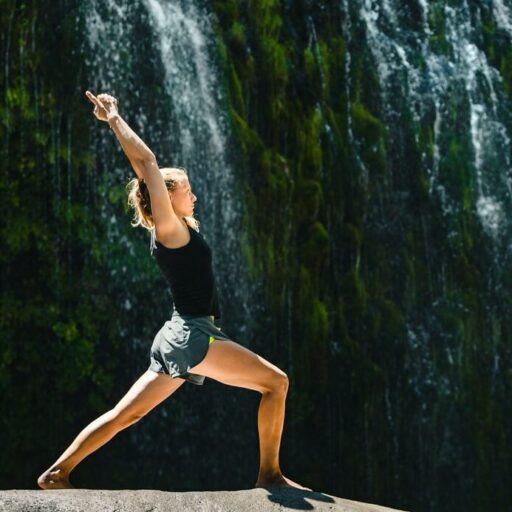
🧘 Outdoor Yoga, Tai Chi, and Mindful Movement
Outdoor mobility work can combine balance, breathing, flexibility, and attention. Choose a stable, clean surface and adapt poses to temperature and footing.
A 15-minute sequence:
- Two minutes of relaxed breathing.
- Cat-cow or standing spinal mobility.
- Supported squat or chair sit-to-stand.
- Low lunge with controlled range.
- Single-leg balance near a stable support.
- Slow tai chi-style weight shifts.
- Two minutes of quiet walking.
Outdoor practice is not a contest for the most dramatic pose. The ground is not impressed by your hamstring ambition.
👉 CHECK PRICE on:
- Manduka yoga mats: Amazon | Manduka Official Website
- Gaiam yoga accessories: Amazon | Gaiam Official Website
🏋️ Outdoor Strength Training and Calisthenics
Outdoor strength sessions can use body weight, resistance bands, benches, stairs, and light backpacks.
Full-body park workout
Complete three rounds with comfortable form:
- 8–15 bench squats
- 6–12 incline push-ups
- 8–12 reverse lunges per side
- 12–20 calf raises
- 20–40 seconds of plank
- 30–60 seconds brisk walking
Rest as needed. Stop two or three repetitions before technical failure, especially on unfamiliar surfaces.
👉 CHECK PRICE on:
- TRX Suspension Trainer: Amazon | TRX Training Official Website
- TheraBand resistance bands: Amazon | TheraBand Official Website
🌲 Forest Bathing and Low-Intensity Nature Walks
Forest bathing, or shinrin-yoku, generally involves slow, sensory-focused time among trees rather than a strenuous hike. It can support relaxation and mindful attention.
A forest-bathing session:
- Walk slowly for five minutes.
- Pause and notice distant and nearby sounds.
- Observe colors, textures, and light.
- Touch only safe, known natural materials.
- Sit or stand quietly for several minutes.
- Return at an easy pace.
It is a complementary wellness practice, not a cure for illness. Explore our Forest Bathing Benefits category for more practical ideas.
⚽ Outdoor Sports, Play, and Active Recreation
Sports add skill, social connection, and intermittent intensity:
- Soccer
- Tennis
- Basketball
- Ultimate frisbee
- Volleyball
- Pickleball
- Tag games
- Frisbee golf
- Playground activities
Use gradual warm-ups and pay attention to repetitive strain. A friendly game can become vigorous quickly because competition turns “casual” into “I must defend this honor” in under 30 seconds.
👨 👩 👧 👦 How Nature Influences Physical Activity Across Age Groups
Nature affects people differently depending on age, health, confidence, access, and social context.
🧒 Children and Teenagers
Children often benefit from unstructured outdoor play, which develops:
- Fundamental movement skills
- Balance and coordination
- Spatial awareness
- Cardiovascular fitness
- Social problem-solving
- Confidence and risk assessment
The American Academy of Pediatrics provides guidance on physical activity and healthy development.
Design outdoor activities around play rather than exercise quotas:
- Nature scavenger hunts
- Obstacle courses
- Bike rides
- Ball games
- Gardening
- Creek or beach exploration with supervision
Safety includes sun protection, hydration, traffic separation, water supervision, and awareness of heat and air quality.
🧑 💼 Adults With Busy Schedules
For busy adults, proximity is more useful than ambition. A 10-minute green-space walk between meetings may be easier to sustain than a weekend-only fitness plan.
Try “activity stacking”:
- Walk during a phone call.
- Hold a walking meeting.
- Use stairs in a park or public space.
- Cycle part of a commute.
- Take lunch outside.
- Perform mobility work while children play.
- Garden while listening to educational audio.
The goal is to reduce the number of decisions required. Keep shoes, a light layer, and a water bottle ready.
👵 Older Adults and Healthy Aging
Older adults may gain from outdoor walking, balance training, gardening, and social recreation. Routes should include:
- Stable surfaces
- Clear edges
- Rest points
- Shade
- Accessible toilets
- Good lighting
- Low traffic conflict
Begin with short sessions and use assistive devices when recommended. A physical therapist can help tailor balance and strength exercises.
♿ Accessibility, Disability, and Inclusive Outdoor Exercise
Inclusive outdoor activity requires more than adding a ramp. Consider:
- Firm, smooth, wide paths
- Manageable grades
- Accessible parking and toilets
- Seating with armrests
- Tactile and visual signage
- Quiet zones
- Adaptive equipment
- Companion and service-animal access
- Accessible information about distance and terrain
The National Center on Health, Physical Activity and Disability offers resources for inclusive physical activity.
A natural setting can support health only if people can enter, move through it, rest, and feel welcome. Accessibility is not a bonus feature. It is part of the design brief.
🏙️ Urban Nature, Green Infrastructure, and Active Living
You do not need a remote forest to benefit from nature. Urban trees, pocket parks, green roofs, community gardens, canals, and planted walking routes can support activity.
🌳 Parks, Street Trees, and Pocket Gardens
Small natural spaces can provide:
- Short walking destinations
- Shade
- Seating
- Social contact
- Visual relief
- Places for outdoor classes
- Opportunities for gardening and play
A five-minute green-space break may be more realistic than a long trip to a regional park. Repetition makes the difference.
🚶 Walkable Neighborhoods and Active Transportation
Walkable neighborhoods connect daily needs with movement. Useful features include:
- Continuous sidewalks
- Safe crossings
- Traffic calming
- Protected bike lanes
- Mixed-use destinations
- Street trees
- Lighting
- Public seating
The CDC’s Active People, Healthy Nation initiative discusses strategies that make physical activity more accessible in communities.
Walking to a shop may produce less dramatic scenery than a mountain hike, but it can deliver something the mountain cannot: repeatability on a Tuesday morning.
🏘️ Equity and Access to Safe Natural Spaces
Access to nature is shaped by:
- Income
- Housing location
- Transport
- Disability access
- Crime and perceived safety
- Environmental pollution
- Work schedules
- Cultural inclusion
- Park maintenance
People should not be told to “just hike” when the nearest safe green space is far away or inaccessible. Public policy can support equitable access through connected parks, tree canopy, public transit, lighting, community programming, and accessible design.
The Trust for Public Land examines connections between parks, health, and equity. Environmental health is also public health.
🗺️ How to Find Nearby Trails, Parks, and Recreation Areas
Useful tools include:
- National Park Service Find a Park
- AllTrails
- TrailLink
- Local parks and recreation departments
- Community garden networks
- Walking and cycling advocacy groups
- Public transit trip planners
Before visiting, check:
- Trail difficulty
- Surface type
- Elevation
- Parking or transit
- Restrooms
- Weather closure
- Cell coverage
- Accessibility
- Dog and bicycle rules
A beautiful route is not a good route if it surprises you with a washed-out bridge halfway through.
🧠 Nature, Motivation, and Exercise Psychology
Nature can influence exercise psychology through enjoyment, autonomy, attention, identity, and perceived effort.
✅ Why Outdoor Exercise Can Feel Easier
Outdoor exercise may feel easier because:
- Scenery distracts from effort.
- Movement has a destination.
- Pace changes naturally.
- Social interaction adds enjoyment.
- The activity feels recreational.
- Sensory stimulation reduces monotony.
This does not mean the body is doing less work. A hilly walk can feel mentally pleasant while producing substantial cardiovascular demand.
Use perceived exertion:
- 1–2: Very easy
- 3–4: Easy to moderate
- 5–6: Challenging but sustainable
- 7–8: Hard intervals
- 9–10: Near-maximal effort
Most general fitness should include plenty of moderate work and only selected higher-intensity efforts.
✅ Intrinsic Motivation, Awe, and Restoration
Intrinsic motivation means you move because the activity itself feels rewarding. Nature can support this through:
- Exploration
- Beauty
- Awe
- Play
- Discovery
- Calm
- Personal meaning
Awe may shift attention away from self-focused worry and toward a larger perspective. The effect is not guaranteed, but it explains why a quiet overlook can feel emotionally powerful even when your step count is unimpressive.
Try an “awe route” once weekly: choose a view, tree canopy, waterfront, or sunrise location that makes you pause.
❌ Common Bariers to Exercising Outdoors
| Barrier | Practical solution |
|---|---|
| Lack of time | Use five- to 15-minute walks |
| Bad weather | Prepare layers and an indoor backup |
| Safety concerns | Use populated routes or go with a group |
| Poor fitness confidence | Start on flat, short paths |
| Allergies | Check pollen, choose lower-exposure times |
| Accessibility | Research surfaces, grades, benches, and toilets |
| Boredom | Add audio, photography, or route variety |
| Gear anxiety | Begin with comfortable shoes and basic layers |
| Transportation | Use nearby pocket parks or green streets |
| Fear of judgment | Choose low-traffic times or familiar routes |
Do not let equipment become a ceremonial gatekeeper. You can begin with ordinary athletic shoes and a safe route.
📱 Technology, Fitness Apps, and Screen-Free Movement
Technology can improve navigation, safety, pacing, and motivation:
- Garmin watches for GPS and heart-rate tracking
- Apple Watch for activity monitoring and emergency features
- Strava for route and social tracking
- AllTrails for trail information
- Komoot for route planning
- AirNow for air-quality checks
- Weather apps forecast alerts
Technology can also distract from nature. Use a “minimum necessary screen” approach:
- Download the route.
- Share your plan if needed.
- Set safety alerts.
- Put the phone away.
- Recheck only at planned points.
Data should support awareness, not turn a peaceful walk into a quarterly performance review.
🛡️ Outdoor Exercise Safety: Risks, Preparation, and Prevention
Safety is not the opposite of adventure. It is what lets adventure continue.
🦟 How to Prevent West Nile Virus and Insect Bites
The CDC’s West Nile virus prevention guidance recommends reducing mosquito exposure by:
- Using an EPA-registered insect repellent.
- Wearing long sleeves and long pants when appropriate.
- Treating clothing and gear with permethrin products according to label directions.
- Removing standing water around homes.
- Exercising during times and locations with fewer mosquitoes when possible.
- Checking for ticks after wooded or grassy outings.
EPA-registered repellents may contain DET, picaridin, oil of lemon eucalyptus, or other approved active ingredients. Follow product labels, especially for children and pets.
🌞 Sun Exposure, Heat Illness, and Hydration
Use:
- Broad-spectrum sunscreen
- Sunglasses
- A brimed hat
- Lightweight clothing
- Shade breaks
- Hydration appropriate to duration and heat
The American Academy of Dermatology recommends broad-spectrum, water-resistant sunscreen with SPF 30 or higher for exposed skin.
For longer or hotter sessions, consider electrolytes, especially if sweating heavily. Avoid forcing excessive water intake. Hydration needs vary by body size, temperature, pace, and sweat rate.
🐍 Wildlife, Plants, and Environmental Hazards
Common hazards include:
- Poison ivy, oak, or sumac
- Ticks
- Snakes
- Stinging insects
- Unstable rocks
- Falling branches
- Fast-moving water
- Heat-reflective surfaces
- Poorly marked trails
Stay on established paths where possible. Do not touch unfamiliar plants or feed wildlife. If bitten or stung, follow local medical guidance, especially for breathing difficulty, swelling, severe pain, or allergic symptoms.
🧭 Navigation, Trail Etiquette, and Emergency Planning
Before a longer outing:
- Tell someone your route and expected return.
- Check weather and closures.
- Download maps or carry a paper backup.
- Bring water, food, and basic first aid.
- Know your turnaround point.
- Keep your phone charged.
- Stay within your skill and daylight limits.
Trail etiquette usually includes yielding appropriately, controlling dogs, packing out waste, respecting closures, and leaving natural objects where you find them. The Leave No Trace Center for Outdoor Ethics provides the seven principles of responsible recreation.
👟 Footwear, Clothing, and Essential Outdoor Gear
Choose gear based on activity rather than marketing drama.
| Need | Useful feature |
|---|---|
| Walking | Comfortable fit, secure heel, appropriate traction |
| Hiking | Stable sole, protection from terrain, weather suitability |
| Running | Activity-specific fit and cushioning |
| Cycling | Certified helmet, visibility, gloves |
| Rain | Breathable waterproof shell |
| Cold | Layering and moisture management |
| Heat | Lightweight, breathable, sun-protective clothing |
| Navigation | Offline map, compass, charged phone |
| Hydration | Bottle or reservoir you can carry comfortably |
👉 CHECK PRICE on:
- Darn Tough hiking socks: Amazon | Darn Tough Official Website
- Patagonia outdoor clothing: Patagonia Official Website
- The North Face outdoor layers: Amazon | The North Face Official Website
- Black Diamond headlamps: Amazon | Black Diamond Official Website
❤️ When to Modify or Stop an Outdoor Workout
Stop or modify activity for:
- Chest pain or pressure
- Fainting or near-fainting
- Severe shortness of breath
- Confusion
- Loss of coordination
- Suden weakness
- Signs of heat illness
- Unusual heart palpitations
- Severe joint pain
- Dangerous weather
- Worsening asthma symptoms
If symptoms are severe or emergency-related, contact local emergency services. If you have a chronic condition, ask your healthcare professional how to modify outdoor activity safely.
📅 How to Spend More Time Outdoors and Move More
The trick is to design an environment that makes the next action obvious.
1. Start With Short Nature Walks
Begin with five to 15 minutes. The objective is to create a repeatable success, not to prove your worth to a mountain.
Track:
- Duration
- Perceived effort
- Mood before and after
- Pain or stiffness
- Sleep that night
- Weather conditions
Increase gradually when the session feels manageable for several outings.
2. Schedule Outdoor Activity Around Your Energy
Some people feel strongest in the morning; others become energetic after work. Use your natural rhythm.
- Morning: daylight and gentle walking
- Miday: short park break
- Afternoon: cycling or strength work
- Evening: easy walk, if visibility and safety allow
Do not force intense workouts at the time of day when your energy is consistently lowest.
3. Turn Errands Into Active Transportation
Start with realistic distances:
- Walk one short errand weekly.
- Carry only what you can manage safely.
- Use a backpack or pannier if appropriate.
- Add a longer route occasionally.
- Combine walking with transit for greater distance.
Active transportation can increase routine movement without requiring a separate workout block.
4. Build a Flexible Weather Backup Plan
Create three versions of your routine:
- Green plan: Ideal outdoor conditions.
- Yellow plan: Modified duration, route, or intensity.
- Red plan: Indoor movement or recovery.
Examples:
| Condition | Green/yellow/red choice |
|---|---|
| Light rain | Waterproof layer, shorter route |
| Extreme heat | Early walk, shaded route, indoor strength |
| Smoke | Indoor workout |
| Ice | Mobility and resistance training indoors |
| Strong wind | Sheltered walk or indoor cycling |
Our Climate Aware Fitness category explores ways to keep moving while respecting environmental conditions.
5. Invite Friends, Family, or a Walking Group
Make the invitation specific:
- “Would you like to walk for 20 minutes at 6 p.m.?”
- “Should we try the flat loop Saturday morning?”
- “Can we garden together for half an hour?”
Specific plans are easier to accept than “We should exercise sometime.”
6. Progress Gradually With the FIT Principle
FITT means:
- Frequency: How often
- Intensity: How hard
- Time: How long
- Type: What activity
Change one or two variables at a time. For example, increase walking duration before adding steep hills and a heavy backpack. The American College of Sports Medicine provides broader exercise guidance.
7. Track Steps, Time, Mood, and Recovery
Useful measures include:
- Weekly minutes of activity
- Number of outdoor sessions
- Walking distance
- Perceived exertion
- Sleep quality
- Mood
- Muscle soreness
- Pain response
- Weather and air quality
A lower step count with better sleep and consistent practice may represent progress. Fitness is not only what happens during the workout; it is also how well you recover afterward.
8. Make Nature a Regular Part of Your Routine
Use habit cues:
- After morning coffee, walk to the end of the block.
- After lunch, visit a nearby tree-lined route.
- On Saturday, complete a longer park loop.
- Once monthly, explore a new trail.
- Seasonally, adapt timing and clothing.
The most effective nature-based routine is rarely the most dramatic. It is the one that survives busy weeks, mediocre weather, and the occasional mysteriously missing sock.
🏋️ Sample Outdoor Exercise Plans for Every Fitness Level
These examples are templates, not prescriptions. Adjust for your health, terrain, weather, and medical guidance.
🌱 Beginner Plan: 20-Minute Park Walking Routine
Frequency: Three to five days weekly
- Two minutes: very easy walking.
- Five minutes: comfortable pace.
- Five minutes: slightly quicker pace.
- Three minutes: easy pace with gentle posture checks.
- Five minutes: relaxed cool-down.
Progress by adding two to five minutes every one or two weeks if recovery is good.
🌿 Intermediate Plan: Trail Walking and Strength Circuit
Frequency: Three or four sessions weekly
- 30–45 minutes of trail walking
- Include four moderate hills or brisk intervals
- Complete two rounds of:
- 10 bench squats
- 8 incline push-ups
- 10 step-ups per side
- 15 calf raises
- 30-second loaded carry
Keep at least one easier day between demanding sessions.
🌲 Advanced Plan: Hiking, Hill Training, and Recovery
Frequency: Four or five sessions weekly
- One longer hike at conversational intensity
- One hill session with six to 10 controlled climbs
- One strength session
- One easy recovery walk
- One optional recreational activity
Do not increase distance, elevation, speed, and pack weight simultaneously. Choose one primary progression.
☔ Indoor Alternatives for Poor Weather
When outdoor conditions are unsafe, try:
- Treadmill incline walking
- Stationary cycling
- Indoor stair climbing
- Resistance-band circuits
- Bodyweight strength
- Mobility flows
- Indoor walking videos
- Mall walking
- Swimming at a supervised facility
The point is continuity. A sensible indoor session keeps the habit alive until the clouds stop auditioning for a disaster film.
📊 Nature-Based Exercise Compared With Indoor Workouts
Indoor and outdoor exercise are not rivals. They are tools with different strengths.
✅ Advantages of Exercising Outdoors
- Natural scenery and sensory variety
- Daylight exposure
- Free or low-barier walking opportunities
- Terrain variation
- Active transportation possibilities
- Social and recreational context
- Potential stress reduction
- Greater connection to place and season
❌ Limitations and Situations Favoring Indoor Exercise
Indoor exercise may better when:
- Weather is hazardous
- Air quality is poor
- You need precise resistance or pacing
- You are rehabilitating an injury
- You need privacy
- Accessibility outdoors is limited
- You require specialized equipment
- Darkness creates unacceptable safety risk
⚖️ How to Combine Indoor and Outdoor Training
| Goal | Outdoor option | Indoor option |
|---|---|---|
| Aerobic base | Park walking or cycling | Treadmill or bike |
| Strength | Park circuit | Free weights or machines |
| Balance | Trail or grass drills | Supported balance work |
| Mobility | Outdoor yoga | Home mobility session |
| Recovery | Slow nature walk | Gentle stretching |
| Skill practice | Hiking or sport | Controlled gym drills |
A hybrid approach is often the most resilient. You can enjoy the park when conditions cooperate and still train consistently when they do not.
🔬 What Research Says About Nature and Physical Activity
📚 Key Findings From Exercise, Public Health, and Environmental Studies
Research commonly supports these conclusions:
- Nature exposure is associated with improved well-being.
- Green-space access is associated with walking and active recreation.
- Outdoor activity can improve enjoyment and perceived restoration.
- Physical activity provides established health benefits regardless of setting.
- Weather and daylight influence recreation decisions.
- Urban nature can be meaningful even when wilderness is unavailable.
The UCLA Health summary cites the American Psychological Association’s recommendation of at least two hours per week in nature. That is a useful behavioral target, but not a rigid prescription. The study behind the two-hour finding was observational, so it cannot prove that crossing the threshold causes better health.
The first video’s University of Utah perspective adds a cognitive angle: portable EEG measurements suggest nature walks may restore attention more than comparable urban walks. This is intriguing and relevant, but it should not be inflated into a claim that every forest walk produces a predictable brain-health response.
The provided PNAS link could not be reliably reviewed from its accessible page because it displayed a security-verification screen. We therefore do not attribute specific findings to that article. That restraint matters: good health writing distinguishes verified evidence from plausible interpretation.
📏 Understanding Corelation, Causation, and Research Limits
Suppose people who visit parks report better health. Several explanations are possible:
- Nature improves health.
- Healthier people are more able to visit nature.
- Wealth, transport, safety, and neighborhood quality influence both.
- Social connection explains part of the benefit.
- Outdoor physical activity explains part of the benefit.
- Multiple pathways operate together.
Randomized studies can strengthen causal confidence, but they are difficult for long-term environmental exposure. Researchers use controlled experiments, wearable measures, surveys, geographic data, and physiological markers to build a broader picture.
Our evidence ranking:
- Strongest for exercise: Regular physical activity improves health.
- Promising for nature: Nature exposure may improve stress, mood, restoration, and activity enjoyment.
- Context-dependent: Effects vary by setting, person, season, safety, and access.
- Not supported as a universal claim: Nature alone prevents disease or replaces treatment.
🌍 Climate, Biodiversity, and the Future of Outdoor Exercise
Climate change affects outdoor activity through:
- More frequent heatwaves
- Wildfire smoke
- Flooding
- Storm disruption
- Tick and mosquito range
- Drought and trail damage
- Reduced snow reliability
- Pollen-season changes
Protecting green space supports both recreation and environmental resilience. Shade trees can reduce heat exposure, wetlands can help manage water, and biodiverse landscapes can improve local ecological health.
Climate-aware fitness means:
- Choosing lower-impact transportation when practical
- Respecting trail closures
- Avoiding fragile habitats
- Carrying reusable water containers
- Supporting parks and restoration projects
- Adjusting exercise for heat and air quality
- Choosing durable gear and repairing it when possible
Outdoor fitness should not love nature to death. Leave room for the birds, too.
❓ Frequently Asked Questions About Nature and Physical Activity
Do natural environments like parks and trails encourage more intense or longer workouts?
They can, particularly when scenery, varied terrain, and enjoyment encourage people to continue. Hills, wind, sand, and uneven surfaces may also increase physical demand. However, the effect is not universal. A flat park walk may be less intense than a structured indoor interval session, while a technical trail may be too demanding for a beginner.
Use duration, breathing, perceived exertion, and recovery to judge the workout rather than assuming “outdoors” means “harder.”
What are some examples of outdoor physical activities that improve overall health?
Examples include brisk walking, hiking, cycling, swimming, paddling, gardening, outdoor strength training, running, sports, tai chi, yoga, and active transportation.
A balanced routine should include:
- Aerobic activity
- Muscle strengthening
- Balance or coordination
- Mobility
- Recovery
Choose activities you can perform safely and repeat consistently.
How does the great outdoors influence exercise habits and routines?
Nature can turn exercise into a destination-based habit. A park loop, waterfront route, garden, or trail provides a recognizable cue and a reason to leave the house. Scenery and novelty may also make activity feel less repetitive.
The effect depends on access. A nearby, safe, welcoming space is more likely to shape routine than a distant scenic destination visited twice yearly.
What role does access to green spaces play in promoting regular exercise?
Access affects convenience, safety, motivation, and opportunity. Green spaces with sidewalks, shade, benches, lighting, toilets, and clear paths can support more people, including older adults and people with disabilities.
Access is also an equity issue. Communities need affordable, safe, well-maintained, and inclusive natural spaces rather than advice that assumes everyone can travel to a national park.
Can spending time in nature increase motivation to engage in physical activity?
Yes, it can increase motivation for some people by improving mood, reducing monotony, and creating intrinsic reasons to move. Birdwatching, photography, gardening, and exploration can add purpose.
Motivation still varies. Some people prefer gyms, pools, dance studios, or home workouts. The best setting is the one that supports safe, enjoyable repetition.
How does being in nature impact overall physical fitness levels?
Nature affects fitness indirectly through the activity performed there. Hiking can improve endurance and leg strength; cycling can improve cardiovascular fitness; outdoor calisthenics can improve strength; uneven trails can challenge balance.
Nature exposure alone does not build all fitness qualities. Pair outdoor activity with progressive resistance training, mobility work, and adequate recovery.
What are the benefits of exercising outdoors for mental health?
Outdoor exercise may support mood, stress regulation, attention restoration, social connection, and sleep. Natural scenery can offer soft fascination, while movement provides established psychological benefits.
These benefits are supportive, not a substitute for mental-health treatment. Seek professional help for persistent or severe symptoms.
What environmental factors can affect performance in physical activities?
Important factors include temperature, humidity, wind, precipitation, daylight, altitude, terrain, air quality, pollen, smoke, traffic, and surface conditions.
Adapt by changing:
- Time of day
- Route
- Pace
- Duration
- Clothing
- Hydration
- Indoor or outdoor setting
Checking the forecast and AirNow before exercise is a small habit with a large safety payoff.
How does nature affect the human body?
Nature may influence the body through physical movement, stress regulation, sensory stimulation, daylight exposure, sleep timing, and environmental conditions. Walking in a forest, for example, combines exercise with visual and auditory input, while a sunny morning may provide strong circadian light cues.
Responses differ by person. Nature is not a single dose or treatment, and claims about immunity, hormones, or brain function should be interpreted according to the quality of the evidence.
Is a five-minute nature walk worthwhile?
Yes. Five minutes can improve mood, interrupt sitting, provide daylight, and make future activity more likely. It may not produce the same cardiovascular training effect as a longer workout, but it is a useful starting point.
Think of it as laying the first stepping stone, not pretending you have crossed the entire river.
Is exercising outdoors better than exercising indoors?
Neither is universally better. Outdoor exercise offers nature exposure, varied terrain, daylight, and recreation. Indoor exercise offers climate control, predictable surfaces, privacy, equipment, and safety during poor conditions.
A combination usually provides the greatest flexibility.
How can beginners exercise outdoors safely?
Start with a short, flat, familiar route. Wear comfortable shoes, carry water, check weather and air quality, tell someone your plan for longer outings, and increase duration gradually.
Use the talk test and stop for concerning symptoms. If you have a medical condition or have been inactive for a long time, ask a healthcare professional how to begin.
Can nature-based exercise help with burnout?
It may provide recovery space, movement, daylight, and separation from work demands. A slow walk can be helpful, but burnout often requires broader changes involving workload, boundaries, sleep, social support, and professional care.
Do not turn recovery into another performance target. The aim is restoration, not squeezing productivity out of every tree.
🎯 Take the Next Step Toward Nature-Based Fitness
Choose the smallest action that feels realistic:
- Walk for five minutes near trees.
- Visit a local park during daylight.
- Replace one short car trip with walking.
- Try a beginner trail with a friend.
- Complete a park strength circuit.
- Check air quality before your next outdoor workout.
- Schedule one nature session this week.
Then ask yourself: Did I enjoy it enough to repeat it? If the answer is yes, you have found a powerful starting point. If the answer is no, change the route, activity, timing, or setting. Nature has many doors; you do not have to enter through the first one you see.
🔗 Related Content
Explore more practical Fitness and Nature™ resources: