Support our educational content for free when you purchase through links on our site. Learn more
Is Finest Nutrition a Good Brand? Our 2026 Verdict 🌿

Is Finest Nutrition a good brand? It can be a practical choice for basic supplements, but the label alone doesn’t prove a product is independently tested, effective, or right for you. Check the exact formula, dose, safety warnings, and any product-specific quality certification before buying.
Finest Nutrition is sold through Walgreens, which makes the range easy to find for many shoppers. But when we compared retailer information with what supplement labels and quality claims can actually tell you, one detail stood out: a familiar store brand is not the same as independent proof of quality.
Our advice is simple: choose a supplement for a clear reason, compare its full label with reliable health guidance, and ask a pharmacist or clinician about interactions if you take medication. Here’s how to make that call without getting dazzled by a shiny bottle—or spooked by one.
Key Takeaways
- Finest Nutrition may suit basic supplement needs, but judge the exact product rather than the brand name alone.
- Walgreens availability and a satisfaction guarantee don’t prove clinical effectiveness or independent testing.
- Check the Supplement Facts panel, serving size, ingredient amounts, warnings, allergens, and expiration date.
- Supplements aren’t FDA-approved for safety and effectiveness before sale. Look for relevant product-specific certification and verify it with the certifier.
- Ask a healthcare professional before supplementing if you take medication, have a health condition, are pregnant or breastfeeding, or are choosing a product for a child.
Table of Contents
- ⚡️ Quick Tips and Facts
- 🌿 What Is Finest Nutrition? Brand Background and Walgreens Connection
- Who Owns Finest Nutrition, and Where Are Its Supplements Sold?
- What Does the Brand Make? Vitamins, Minerals, and More
- 🔎 Is Finest Nutrition a Good Brand? Our Overall Verdict
- 🧪 Finest Nutrition Quality, Manufacturing, and Third-Party Testing
- GMP Standards and FDA Oversight: What They Do—and Don’t—Mean
- How to Check for USP, NSF, or Other Independent Certifications
- Ingredient Sourcing, Label Accuracy, and Transparency
- 💊 Finest Nutrition Supplement Categories and Standout Products
- Multivitamins and Daily Wellness Formulas
- Single Vitamins and Minerals
- Herbal Supplements and Specialty Formulas
- Protein, Fitness, and Sports Nutrition Products
- Children’s, Women’s, and Men’s Supplements
- 📋 How to Evaluate a Finest Nutrition Supplement Label
- Serving Size, Daily Values, and Supplement Facts
- Active Ingredients, Forms, and Dosages
- Fillers, Allergens, and Other Ingredients to Check
- ⚖️ Finest Nutrition Pros and Cons
- 💰 Is Finest Nutrition Good Value for Money?
- How to Compare Cost Per Serving
- When a Premium Supplement May Be Worth It
- 🛡️ Safety, Side Effects, and Medication Interactions
- Who Should Talk to a Healthcare Professional First?
- How to Use Supplements Safely
- Recalls, Complaints, and How to Check Product Alerts
- 🛒 Where to Buy Finest Nutrition and How to Get Help
- Buying at Walgreens or Online
- Checking Expiration Dates, Seals, and Product Authenticity
- Returns, Customer Service, and Product Questions
- 🔄 Finest Nutrition vs. Other Supplement Brands
- How It Compares With Nature Made
- How It Compares With NOW Foods and Kirkland Signature
- Choosing a Brand for Your Health Goals
- 🎯 Who Should Consider Finest Nutrition—and Who Might Look Elsewhere?
- ✅ Smart Supplement Shopping Tips
- 🏁 Conclusion
- 🔗 Recommended Links
- ❓ FAQ
- Is Finest Nutrition a Walgreens brand?
- Are Finest Nutrition vitamins FDA approved?
- Does Finest Nutrition use third-party testing?
- Are Finest Nutrition supplements safe to take every day?
- Is Finest Nutrition better than Nature Made?
- Are Finest Nutrition vitamins suitable for vegetarians or vegans?
- How can I check whether a Finest Nutrition product has been recalled?
- 📚 Reference Links
⚡ Quick Tips and Facts
For the related question of who owns the label, see our guide to Is Finest Nutrition a Walgreens Brand? 🌿.
Short answer: Finest Nutrition can be a reasonable, convenient source of basic vitamins and minerals, but the brand name alone does not establish that every product is effective, independently tested, or right for you. Judge the individual supplement by its label, dose, evidence, and quality checks.
| At a glance | What we can say |
|---|---|
| Brand identity | Walgreens describes Finest Nutrition products under its Walgreens Brands range. |
| Product range | Walgreens listings span vitamins, minerals, multivitamins, herbal products, and other supplements. |
| Quality evidence | Retailer branding and a satisfaction guarantee are not substitutes for product-specific independent testing. |
| FDA status | Dietary supplements are not approved by the FDA for safety and effectiveness before sale. |
| Best first step | Check the Supplement Facts panel, serving size, ingredient forms, warnings, and any credible certification on the exact product. |
- ✅ Potentialy practical: Widely sold through Walgreens, with a broad selection of everyday supplement types.
- ⚠️ Check product by product: Formulas, ingredients, and available quality information can differ across products and over time.
- ❌ Don’t assume “quality guaranteed” means clinically proven: A satisfaction policy is not evidence that a supplement treats or prevents disease.
- 🩺 Ask a clinician or pharmacist before starting a supplement if you take medication, are pregnant or breastfeeding, have a health condition, or are choosing a supplement for a child.
The FDA’s overview of dietary supplements explains how supplements are regulated. We’ll return to what that means for Finest Nutrition after looking at the brand behind the bottle.
🌿 What Is Finest Nutrition? Brand Background and Walgreens Connection
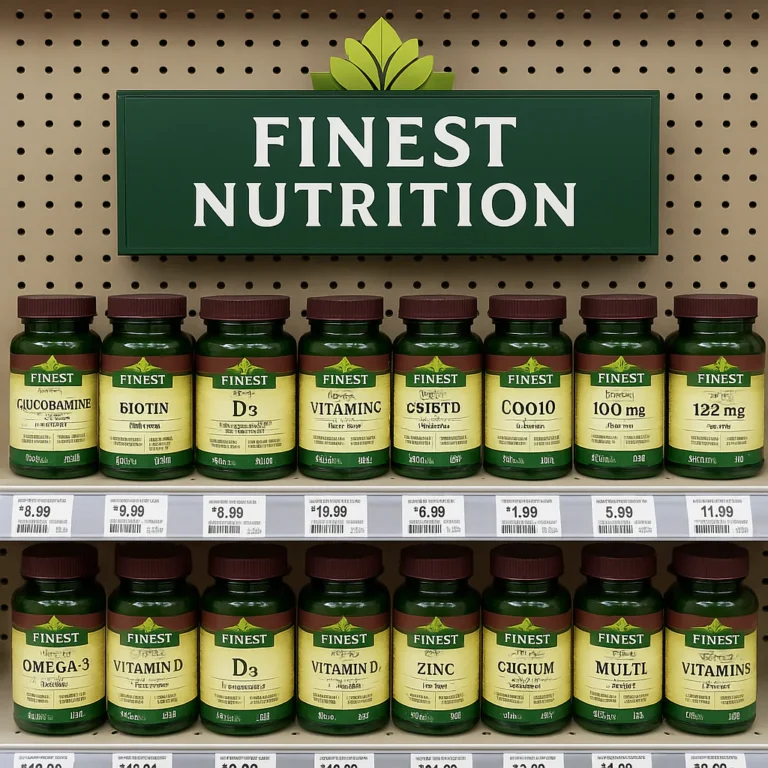
Finest Nutrition is a supplement label sold through Walgreens. Walgreens product search pages describe the transition to Walgreens Brands with the phrase “New look, same quality” and advertise a “100% satisfaction guaranteed” promise. Those statements help identify the retail relationship and its customer-service positioning; they do not independently verify the quality or effectiveness of each formula.
Who Owns Finest Nutrition, and Where Are Its Supplements Sold?
Walgreens’ listings present Finest Nutrition as part of its own-brand assortment. Products may be available online, in stores, or for delivery, but selection and fulfillment vary by location. The retailer’s Finest Nutrition search results are useful for checking current listings, while the Walgreens Brands information provides broader context about its private-label products.
A retailer-owned label can be convenient: you can shop alongside other household and pharmacy products, and the retailer may offer a satisfaction policy. But convenience doesn’t tell us who manufactured a particular bottle, what testing was performed, or whether a formula is a good match for your needs. Look for product-specific evidence rather than treating the Walgreens name as a blanket endorsement.
What Does the Brand Make? Vitamins, Minerals, and More
Walgreens search listings have included a wide assortment of supplement types, such as multivitamins, individual vitamins and minerals, children’s supplements, herbal products, and products marketed for specific wellness goals. Catalog size and availability can change, so check the current listing and package label rather than relying on an old product description.
| Product category | What to examine on the label | A useful question |
|---|---|---|
| Multivitamins | Amounts per serving, nutrients included, percentage of Daily Value | Does it fill a real dietary gap, or duplicate another supplement? |
| Single vitamins | Dose, form, serving instructions | Is this dose appropriate for your needs and health history? |
| Minerals | Elemental amount, chemical form, interactions | Could it affect a medicine or another mineral you take? |
| Herbal products | Plant part, extract ratio, standardized compounds, warnings | Is there reliable evidence for the claimed purpose? |
| Children’s products | Age range, dose, child-resistant storage guidance | Has a pediatric clinician recommended it? |
For a wider look at practical, lower-waste wellness habits, explore our Green Living Fitness Tips and Eco Therapy Techniques. Supplements can have a place in a health routine, but they don’t replace varied food, movement, sleep, or medical care.
🔎 Is Finest Nutrition a Good Brand? Our Overall Verdict
Our verdict: Finest Nutrition may be a reasonable option for straightforward, appropriately chosen supplements, but available retailer information alone is not enough to rate the whole brand as independently verified or superior. We’d assess each product separately.
Walgreens’ search pages show a substantial assortment and state a satisfaction guarantee. Those are useful shopping signals, but the supplied listings do not establish product-specific ingredient quality, manufacturing details, independent test results, or clinical effectiveness. In other words, a broad shelf is not a lab report.
| What matters | Our assessment | What to verify |
|---|---|---|
| Accessibility | A practical advantage for shoppers who already use Walgreens | Current local stock and fulfillment options |
| Product choice | Broad categories appear in retailer listings | Exact current formula and serving size |
| Quality transparency | Cannot be inferred from retailer branding alone | Product-specific testing or recognized certification |
| Effectiveness | Depends on the ingredient, dose, and reason for taking it | Evidence for the specific ingredient and intended use |
| Safety | Depends on your health, medications, and dose | Label warnings and advice from a clinician or pharmacist |
A good supplement is not automatically a good choice for every person. If you have no known deficiency or clear reason to supplement, start by asking whether you need the product at all. The NIH Office of Dietary Supplements offers consumer guidance on evaluating supplements and discussing them with healthcare professionals.
🧪 Finest Nutrition Quality, Manufacturing, and Third-Party Testing
Quality questions matter because supplements can vary in identity, purity, strength, and manufacturing controls. The key limitation here is that a Walgreens listing or a brand-level statement is not the same thing as a public, product-specific certificate of analysis or independent testing result. We would not claim that every Finest Nutrition product is tested—or that none are—without evidence tied to the exact product.
GMP Standards and FDA Oversight: What They Do—and Don’t—Mean
In the United States, dietary supplement manufacturers must follow current good manufacturing practice requirements. These requirements are intended to help ensure identity, purity, strength, composition, and appropriate manufacturing controls. GMP compliance does not mean the FDA has approved a supplement’s effectiveness or endorsed its claims.
The FDA explains its role in dietary supplement regulation. It also provides information about current good manufacturing practice requirements.
| Quality signal | What it can tell you | What it cannot prove by itself |
|---|---|---|
| GMP manufacturing controls | Procedures exist for producing and handling products consistently | That a product treats a condition or works as advertised |
| FDA facility inspection | The FDA inspected a facility or reviewed compliance matters | That the FDA approved each supplement before sale |
| Retailer satisfaction guarantee | A route to seek assistance under the retailer’s policy | Ingredient purity, dose accuracy, or clinical benefit |
| Independent certification | A third party has assessed defined aspects of a product or process | That the supplement is necessary or appropriate for you |
How to Check for USP, NSF, or Other Independent Certifications
Look for a certification mark on the specific package, then confirm it through the certifier’s own database. Recognized programs include USP Verified and [NSF certification](https://www.nsf.org/consumer-resources/health-beauty/ dietary-supplements). Certification scope differs: some programs assess manufacturing, label contents, contaminants, or banned substances. Don’t assume a logo covers every possible quality question.
A practical check:
- Find the exact product name and formula on the bottle.
- Look for a certification seal—not just the words “tested,” “pure,” or “quality.”
- Search the certifier’s official directory for that product.
- Confirm the listed product matches the package and serving form.
- If no certification is listed, don’t automatically call the product unsafe; simply treat the quality evidence as less transparent.
Ingredient Sourcing, Label Accuracy, and Transparency
A clear label should identify the serving size, the amount of each dietary ingredient, and other ingredients. For botanical products, the plant part and extract details can matter. Proprietary blends deserve extra scrutiny if they prevent you from seeing individual ingredient amounts.
The FDA’s Supplement Facts label guide explains what information to look for. The NIH fact sheets for consumers can help you review evidence and safety information for specific vitamins, minerals, and other ingredients.
Our rule of thumb: if you can’t identify the ingredients and amounts, can’t find useful evidence for the intended purpose, and can’t verify quality claims, choose a more transparent alternative or ask a healthcare professional.
💊 Finest Nutrition Supplement Categories and Standout Products
Finest Nutrition’s listings cover several supplement categories, but a category name is not a recommendation. Product formulas can change, and retailer availability may be limited or variable. Use the current package as the source of truth.
Multivitamins and Daily Wellness Formulas
A multivitamin can help cover certain dietary gaps, but it is not a shortcut to a balanced diet or a guarantee of better health. Check for high-dose nutrients, duplicated ingredients from other products, and nutrients that may not be suitable for your circumstances.
The NIH ODS multivitamin/mineral fact sheet discusses what is known about multivitamins and the limits of the evidence. A clinician may recommend one in particular situations, but more nutrients are not automatically better.
Single Vitamins and Minerals
Single-ingredient supplements can make sense when a deficiency, life stage, diet pattern, or clinician’s advice indicates a need. They can also make accidental overconsumption easier, especially if you combine a multivitamin with separate products.
Before buying, compare:
- Dose per serving with your needs and the label’s Daily Value.
- Ingredient form, where relevant.
- Other products you take, including fortified foods and prescription medicines.
- Warnings and interactions for that nutrient.
The NIH’s vitamin and mineral fact sheets provide nutrient-specific information on sources, recommended amounts, safety, and potential interactions.
Herbal Supplements and Specialty Formulas
Herbal products are not automatically gentle or harmless because they come from plants. Their effects can depend on the plant species, plant part, extract, dose, and interactions with medications. Search the exact ingredient in the NIH’s National Center for Complementary and Integrative Health resources, and discuss use with a pharmacist or clinician if you take medication.
Be cautious of claims that promise to “detox,” rapidly burn fat, cure a condition, or replace prescribed treatment. The FDA explains how to report a problem with a supplement.
Protein, Fitness, and Sports Nutrition Products
If a Finest Nutrition product is marketed for fitness, check its actual protein or active-ingredient amount—not just the front-of-pack language. Consider allergens, sweeteners, serving size, and whether it fits your dietary needs. For competitive athletes, certification against banned substances is especially relevant; NSF Certified for Sport is one program athletes can check.
Supplements work best as supporting cast, not the star of your training plan. Consistent workouts, adequate food, hydration, and recovery still do the heavy lifting. Browse our Natural Bodyweight Exercises and Fitness Gear Reviews for more practical training guidance.
Children’s, Women’s, and Men’s Supplements
Age- and sex-targeted labels can be convenient, but they don’t replace individualized advice. Children’s supplements need careful storage and age-appropriate dosing. Pregnancy and breastfeeding can change nutrient needs and safety considerations. Men’s and women’s formulas may also include ingredients that are unnecessary—or unsuitable—for a particular person.
For pregnancy-related supplement guidance, consult a prenatal clinician and review the CDC’s folic acid guidance. For children, ask a pediatrician before starting routine supplementation, particularly if the child has a medical condition or takes medication.
📋 How to Evaluate a Finest Nutrition Supplement Label
A quick scan of the front label is not enough. Turn the bottle around. The back panel is where the useful details—and sometimes the plot twists—live.
Serving Size, Daily Values, and Supplement Facts
Start with the serving size. A bottle may describe one tablet as a serving, while another product requires several capsules. Compare nutrient amounts per serving, not by package count or front-label claims.
Then check the percentage of Daily Value (%DV). It is a reference point, not a personalized prescription. Someone with a deficiency or special medical need may require different guidance, while another person may not need supplemental intake at all.
Active Ingredients, Forms, and Dosages
Compare the amount of the active ingredient with reliable evidence and your intended use. Some nutrients have upper intake limits or meaningful medication interactions. Different forms may also have distinct absorption, tolerability, or use considerations.
Don’t copy a dose from a friend, influencer, or another product. Ask a healthcare professional whether the ingredient and dose fit your situation. The NIH ODS fact sheets are a practical starting point for understanding individual ingredients.
Fillers, Allergens, and Other Ingredients to Check
Review the “Other Ingredients” line for capsule materials, sweeteners, flavors, colors, and potential allergens. If you have a food allergy, don’t rely on a quick glance or assumptions about a product category. Verify the package and ask the manufacturer or retailer if an ingredient is unclear.
Also check:
- Expiration date and intact seal.
- Storage directions and child-resistant packaging.
- Allergen statements and dietary suitability.
- Warnings for pregnancy, medications, or specific conditions.
- Whether the label includes a lot number and contact information.
⚖️ Finest Nutrition Pros and Cons
| Pros ✅ | Cons / limitations ⚠️ |
|---|---|
| Sold through a familiar pharmacy retailer | Retailer presence does not establish product-specific quality |
| Broad selection of common supplement categories | Formulas and stock can vary; check the current package |
| Walgreens advertises a satisfaction guarantee | A guarantee is not proof of clinical effectiveness |
| Convenient for shoppers who already use Walgreens | Public listing details may not answer questions about sourcing or testing |
| Can be considered for basic, clearly labeled products | Independent certification should be verified product by product |
Who may find the brand convenient? Someone looking for a clearly labeled, basic supplement who can compare the formula and has a sound reason to use it.
Who should be more cautious? Anyone seeking a product for a diagnosed condition, taking medication, shopping for a child, or needing verified sport certification or strong product-specific quality documentation.
💰 Is Finest Nutrition Good Value for Money?
Value isn’t just what the bottle costs. It’s what you get per serving, whether the dose is appropriate, and whether the product has the transparency and quality checks you want. Walgreens may display promotions, and product availability can differ by store or online; check the current listing rather than assuming an offer applies everywhere.
How to Compare Cost Per Serving
Use this simple comparison:
- Note the package’s total number of servings.
- Check how many tablets, capsules, or scops make one serving.
- Compare the relevant ingredient amounts per serving.
- Check whether the product includes an independently verified certification you value.
- Compare against a similar formula, not a product with a different dose or ingredient list.
A bottle with more servings may still be poor value if the dose is unsuitable or the label is unclear. Conversely, a less elaborate product may be all you need.
When a Premium Supplement May Be Worth It
Paying more can be worthwhile when it buys a meaningful difference: verified testing, clear sourcing, a form suited to your needs, or a product designed to meet a specific requirement. But a premium-looking label, influencer endorsement, or long ingredient list does not guarantee better results.
For any brand, including Finest Nutrition, pay for evidence and fit—not decoration.
🛡️ Safety, Side Effects, and Medication Interactions
Dietary supplements can cause side effects and interact with medicines. The FDA and NIH ODS both advise consumers to discuss supplement use with healthcare professionals, especially when health conditions or medications are involved.
Who Should Talk to a Healthcare Professional First?
Check with a clinician or pharmacist before using a supplement if you:
- Take prescription or regular over-the-counter medication.
- Are pregnant, trying to become pregnant, or breastfeeding.
- Have a chronic condition, upcoming surgery, or a history of supplement reactions.
- Are choosing a product for a child or teenager.
- Plan to combine several supplements or use a high dose.
- Want to treat symptoms or replace prescribed care.
How to Use Supplements Safely
- Define the reason. Identify the specific need rather than buying from a vague promise.
- Review the evidence. Use an authoritative ingredient fact sheet and talk with a professional.
- Check the full label. Confirm serving size, dose, warnings, allergens, and expiration date.
- Check interactions. Ask a pharmacist or clinician, especially if you use medication.
- Follow directions. Don’t exceed the label or combine overlapping products without advice.
- Monitor how you feel. Stop use and seek medical advice if you experience a concerning reaction.
- Report serious problems. The FDA explains how to report supplement-related adverse events.
Recalls, Complaints, and How to Check Product Alerts
Search the exact product name and manufacturer or retailer in the FDA’s recalls, market withdrawals, and safety alerts. Keep the package and lot number if you need to ask about a complaint or report an adverse event.
A product recall is not the only reason to contact a healthcare professional. If a supplement causes a reaction, symptoms are severe or worsening, or you suspect an interaction, seek appropriate medical advice promptly.
🛒 Where to Buy Finest Nutrition and How to Get Help
Walgreens is the most direct place to check Finest Nutrition listings. Product availability may vary, and retailer pages can change. Confirm the exact product, formula, and seller before placing an order.
Buying at Walgreens or Online
Check the Walgreens Finest Nutrition listings for current product selection and fulfillment details. If shopping through another marketplace, check the seller, package condition, expiration date, and return policy. Avoid products with broken seals or incomplete labels.
Checking Expiration Dates, Seals, and Product Authenticity
When the bottle arrives or you pick it up, inspect:
- The tamper-evident seal and packaging.
- Expiration date and lot number.
- Product name and label against the listing.
- Storage conditions and any signs of damage.
- The seller and return process.
If something looks off, don’t consume the product. Contact the retailer using its current customer-service channels and retain the packaging.
Returns, Customer Service, and Product Questions
Walgreens advertises a satisfaction guarantee for its own-brand products, but the policy’s terms and exceptions can change. Review the current Walgreens return policy or contact Walgreens customer service for product-specific guidance.
For ingredient, allergen, or manufacturing questions, ask for a response tied to the exact product and lot. A clear answer should be specific—not simply “we care about quality.”
🔄 Finest Nutrition vs. Other Supplement Brands
Brand comparisons are most useful when the products have similar ingredients and doses. A brand-level reputation cannot tell you whether two different formulas are equivalent.
| Brand | What to compare | A sensible approach |
|---|---|---|
| Finest Nutrition | Exact label, available quality documentation, retailer support | Consider for a basic product if the formula and evidence fit |
| Nature Made | Product-specific labels and any stated certification | Check the exact product and certification rather than assuming all products are alike |
| NOW Foods | Product-specific ingredient transparency and quality information | Compare dose, form, warnings, and testing claims |
| Kirkland Signature | Current label and product-specific quality details | Compare the same nutrient and serving basis |
How It Compares With Nature Made
Nature Made publishes product information and identifies products carrying the USP Verified mark. That makes it easier to check certain product-specific quality signals where certification applies. It does not mean every Nature Made product has the same certification—or that it is automatically the better choice for every person.
For a fair comparison, put the two labels side by side and check the nutrient form, dose, serving size, warnings, and certification status.
How It Compares With NOW Foods and Kirkland Signature
NOW Foods and Kirkland Signature offer products across common supplement categories. Their ranges, labels, and quality claims vary by product. Compare the exact supplement, not just the logo on the bottle.
If a brand provides a product-specific certificate, independent certification, or detailed testing information, verify it with the issuing organization. If the evidence is not available, treat that uncertainty the same way across brands.
Choosing a Brand for Your Health Goals
Use this decision checklist:
- For a basic nutrient: prioritize appropriate dose, clear label, and a reason to supplement.
- For a dietary restriction: verify ingredients, allergens, and suitability on the exact package.
- For a medical need: ask the clinician who manages that condition.
- For sport: look for a relevant banned-substance certification.
- For uncertain quality claims: seek product-specific documentation or choose a more transparent option.
A video can offer a quick overview of how some consumers assess brands: “42 Supplement Brands Rated Without Mercy” by The Anti Aging Channel. Treat it as one opinion, not a definitive scientific ranking; a useful rating should explain its criteria and show evidence for each product.
🎯 Who Should Consider Finest Nutrition—and Who Might Look Elsewhere?
Consider Finest Nutrition if you want a basic supplement, can verify the current label, have a clear reason to use it, and are comfortable with the available product-specific quality information.
Look for a more transparent or specialized option if you require a verified sport product, detailed ingredient sourcing, a particular formulation, or evidence that is not available for the Finest Nutrition product you’re considering. If you need treatment for a medical condition, work with a healthcare professional rather than relying on a supplement label.
| Your situation | Practical next step |
|---|---|
| You want a standard vitamin | Compare dose, form, and any certification on the exact product |
| You take medication | Ask a pharmacist about interactions first |
| You’re shopping for a child | Check with a pediatric clinician and follow age-specific guidance |
| You need sport certification | Verify the exact product in a recognized certification directory |
| You can’t tell what’s in the formula | Choose a clearer label or request product-specific details |
✅ Smart Supplement Shopping Tips
- Start with your need, not the marketing claim.
- Read the complete Supplement Facts panel and other ingredients.
- Compare products by dose per serving, not by bottle size or front-label language.
- Check authoritative evidence using NIH ODS fact sheets.
- Verify certification marks in the certifier’s own directory.
- Ask a pharmacist about possible medication interactions.
- Be skeptical of disease-treatment promises and “instant results.”
- Check the package seal, lot number, storage directions, and expiration date.
- Don’t use multiple overlapping supplements without reviewing total intake.
- Keep supplements stored safely and out of children’s reach.
The little label-reading pause is worth it. It may be the difference between buying a supplement you understand and buying a bottle that leaves you with more questions than answers.