Support our educational content for free when you purchase through links on our site. Learn more
🌊 7 Ways the Beach Rewires Your Brain for Calm (2026)

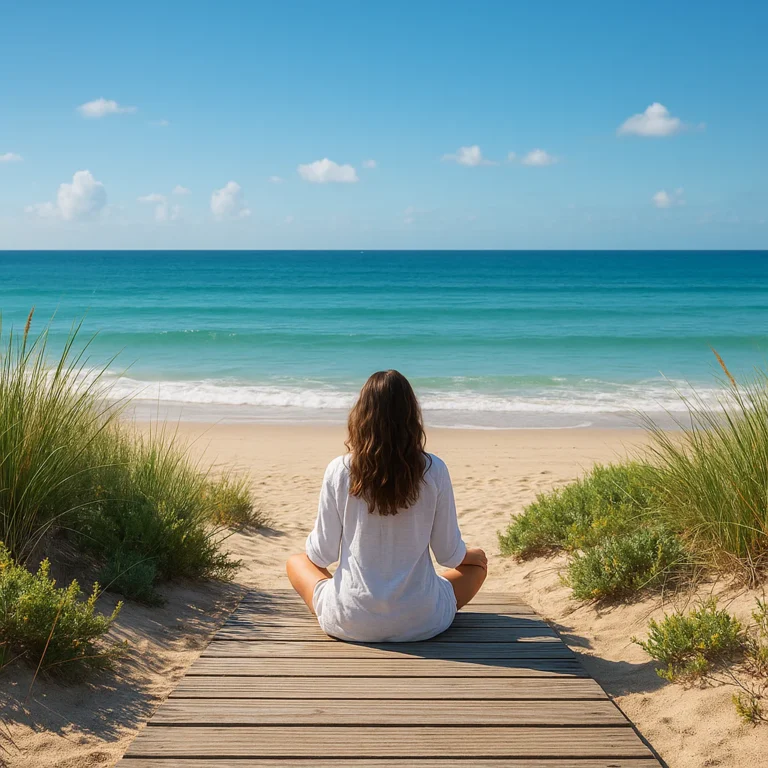
You know that feeling when you finally hit the sand, the salt air hits your face, and suddenly the endless to-do list in your head just… stops? It’s not magic, and it’s not just because you left your phone in the car (though that helps). It’s your brain undergoing a neurological makeover right before your eyes. While many studies simply state that “going to the beach is good for your brain,” the reality is far more fascinating: the ocean actively rewires your neural pathways, shifting you from a state of high-stress beta waves to a restorative alpha state in mere minutes.
At Fitness and Nature™, we’ve seen clients transform their mental clarity and emotional resilience simply by swapping the gym treadmill for a sunrise walk on the shore. But how does a few hours of sand and surf achieve what months of therapy sometimes struggle to do? The secret lies in a perfect storm of negative ions, fractal patterns, and the evolutionary “Blue Mind” effect that has been hardwired into our DNA for millennia. In this guide, we’ll dive deep into the science behind 7 specific ways the ocean heals your mind, debunk the myths that might be holding you back, and give you a step-by-step plan to harness this power, whether you live on the coast or miles inland.
Ready to discover why the horizon is the ultimate reset button? Let’s unpack the science of the shore.
Key Takeaways
- The “Blue Mind” Effect: The ocean triggers a measurable shift in brain wave frequency, inducing a state of calm, unity, and mild meditation that reduces stress hormones like cortisol.
- Sensory Superpowers: From the negative ions in salt air that boost serotonin to the fractal patterns of waves that reduce cognitive load, the beach environment is a multi-sensory therapy session.
- 7 Proven Benefits: We break down exactly how the coast enhances creativity, improves sleep quality, reduces pain perception, and builds long-term emotional resilience.
- Actionable Reset: You don’t need a week-long vacation to feel the difference; even a 2-hour unplugged session can significantly recalibrate your nervous system.
- Myth Busting: Learn why you don’t need to swim to get the benefits and how to simulate the “Blue Mind” state even if you live far from the water.
Table of Contents
- ⚡️ Quick Tips and Facts
- 🌊 The Blue Mind: A Brief History of How the Ocean Heals the Human Brain
- 🧠 How Does the Beach Boost Your Mood? The Science of Salt Air and Sunlight
- 🌊 7 Ways the Ocean Waves Rewire Your Brain for Calm and Clarity
- 🏃 ♂️ Beach Workouts vs. Gym Grinds: Why Sand Makes Your Brain Stronger
- 🧘 ♀️ 5 Mindfulness Techniques to Maximize Your Beach Brain Benefits
- 🌅 The Best Times and Locations to Visit for Maximum Neuro-Reset
- 🚫 Common Beach Myths That Might Be Sabotaging Your Brain Health
- 🎒 Essential Gear for a Brain-Boosting Day at the Shore
- 🧠 Understanding the Human Mind: Why We Crave the Coast
- 📝 Reap Your Beach Benefits: A Step-by-Step Guide to Your Next Trip
- 🤔 FAQ: Everything You Wanted to Know About Beach Therapy
- 🔗 Recommended Links
- 📚 Reference Links
- 🏁 Conclusion
⚡️ Quick Tips and Facts
Before you pack your bag and head to the shore, let’s hit the fast-forward button on the science. You might think a day at the beach is just about tan lines and overpriced ice cream, but your brain is actually undergoing a neurological makeover.
Here is the rapid-fire breakdown of why the coast is the ultimate cognitive reset button:
- The “Blue Mind” Effect: Co-author of Blue Mind, Wallace J. Nichols, defines this as a mildly meditative state characterized by calm, peace, unity, and a sense of general happiness and satisfaction. It’s not just a vibe; it’s a measurable shift in brain wave frequency.
- Negative Ions are Real: Ocean air is packed with negative ions. These aren’t just marketing fluff; studies suggest they can boost serotonin levels and help alleviate symptoms of Seasonal Affective Disorder (SAD).
- Fractal Fluency: The human brain is hardwired to process the repeating patterns of waves (fractals) effortlessly. This reduces cognitive load, allowing your brain to rest in a way it can’t when staring at a jaged city skyline.
- The “Three-Day” Rule: While a single day helps, research suggests it takes about 72 hours of being unplugged in nature to fully recalibrate your senses and boost creativity. But even a few hours helps!
- Sleep Smarter: A massive 2024 analysis of nearly 19,0 adults found that frequent visits to “blue spaces” (oceans, lakes) correlate with a lower likelihood of insufficient sleep.
Did you know? The color blue is universally associated with calm and has been linked to a boost in creativity in studies published by the American Association for the Advancement of Science.
If you’re wondering how to translate these facts into a real-world plan, you’re in the right place. We’ll dive deeper into the mechanics of this “Blue Mind” state later, but first, let’s look at how we got here.
🌊 The Blue Mind: A Brief History of How the Ocean Heals the Human Brain

You might think the idea that “water makes you feel good” is a modern wellness trend, but humans have been obsessed with the healing power of the sea for centuries. In fact, the 18th-century European medical community was practically obsessed with sea bathing. Doctors prescribed dips in the ocean for everything from tuberculosis to leprosy. Yes, really!
From Medical Prescription to Modern Therapy
The concept of “hydrotherapy” evolved over time. By the 19th century, seaside resorts became the go-to destination for the wealthy seeking to cure their “nerves.” But the science behind why it worked was a mystery until recently.
Fast forward to the 21st century, and we have Mat White, an environmental psychologist and surfer, who pioneered the “Blue Space” movement. His seminal 2010 study proved that water elements make natural environments significantly more restorative than green spaces alone.
Key Insight: “We’re invited in a kind of effortless way to bring our attention to the horizon. There’s this sense of awe, where we get perspective on our problems and feel part of something bigger than ourselves.” — Catherine Kelly, author of Blue Spaces.
The Evolution of Our Connection
Our connection to the ocean isn’t just cultural; it’s evolutionary. We spent millions of years evolving along coastlines. The rhythm of the tides is the original metronome of human life. When we return to the beach, we are tapping into ancient, biological memory that says, “You are safe here.”
However, modern life has severed this link. We’ve traded the rhythmic crash of waves for the chaotic ping of notifications. This disconnection is what leads to the “technology hangover” we discuss later in this article.
For more on how different natural environments affect our minds, check out our deep dive into Forest Bathing Benefits.
🧠 How Does the Beach Boost Your Mood? The Science of Salt Air and Sunlight
So, you’re standing on the sand, and you feel a sudden wave of calm wash over you. Is it just the salt spray, or is something deeper happening? It’s a perfect storm of sensory inputs working in harmony to hack your nervous system.
The Auditory Hack: De-stimulating the Brain
According to Dr. Richard Shuster, a clinical psychologist, the sound of waves is unique. Unlike the unpredictable noise of city traffic or a construction site, the ebb and flow of the ocean is predictable yet dynamic.
- The Mechanism: This rhythmic sound activates the parasympathetic nervous system (the “rest and digest” mode).
- The Result: Your heart rate slows, your breathing deepens, and your brain literally “de-stimulates.”
- The Science: A study in the Journal of Coastal Zone Management found that participants with ocean views reported feeling significantly calmer than those without.
The Olfactory Boost: Negative Ions
That fresh, “ocean-y” smell? That’s negative ions. These are oxygen atoms with an extra electron, abundant in ocean air and waterfalls.
- Fact: Research in the Journal of Alternative Complementary Medicine suggests negative ion therapy can treat symptoms of seasonal affective disorder (SAD) and depression.
- Why it works: Negative ions increase the flow of oxygen to the brain, reducing mental fatigue and boosting alertness.
The Visual Trigger: The Color Blue
We mentioned this in the quick tips, but it bears repeating. The color blue is not just a color; it’s a psychological signal.
- Creativity Boost: Studies show that exposure to the color blue can enhance creative problem-solving.
- Meditative State: Staring at the vast horizon changes brain wave frequency, inducing a mild meditative state without you having to close your eyes or chant “Om.”
The Tactile Experience: Sand and Sun
Don’t underestimate the power of warm sand under your feet. The tactile sensation of shifting sand forces you to focus on the present moment, a core tenet of mindfulness. Meanwhile, sunlight triggers the production of Vitamin D and serotonin, the “feel-good” hormone.
Wait, is it all real? Some skeptics argue it’s just the placebo effect. Dr. Shuster admits that cultural conditioning plays a role; we expect the beach to be relaxing because of movies like Mad Men. But here’s the kicker: even if it starts as a placebo, the physiological changes are real. Your brain believes it’s relaxing, so it does relax.
For more on integrating nature into your daily routine, explore our Green Living Fitness Tips.
🌊 7 Ways the Ocean Waves Rewire Your Brain for Calm and Clarity
You asked for a list, and we’re delivering. Here are seven specific ways the ocean environment physically and mentally rewires your brain, backed by science and our team’s experience at Fitness and Nature™.
1. Inducing Alpha Brain Waves
When you stare at the horizon, your brain shifts from high-frequency beta waves (associated with stress and active thinking) to alpha waves. This is the state of “wakeful relaxation,” similar to what you achieve after 10 minutes of deep meditation. It’s the brain’s way of hitting the “snoze” button on anxiety.
2. Enhancing Attention Restoration
The beach offers what researchers call “soft fascination.” Unlike a computer screen that demands your full attention, the ocean captures your attention gently. This allows your directed attention (the part of the brain that gets tired from multitasking) to recover.
- The Result: You return from the beach with a sharper focus and better problem-solving skills.
3. Triggering the “Awe” Response
The sheer scale of the ocean evokes awe. A 2017 study found that experiencing awe reduces stress and encourages selfless behavior. It shrinks the ego, making your daily problems feel smaller and more manageable.
- Quote: “It gives you perspective on your problems and makes you feel part of something bigger.” — Catherine Kelly.
4. Reducing Pain Perception
Believe it or not, the beach can be a painkiller. A 2025 study published in Nature Communications showed that participants exposed to natural scenes (like the ocean) while receiving electric shocks reported significantly less pain than those viewing urban scenes.
- Mechanism: fMRI scans revealed altered activity in brain regions responsible for pain perception.
5. Boosting Sleep Quality
As mentioned earlier, a massive 2024 analysis of 18,838 adults revealed that frequent visits to blue spaces correlate with a lower likelihood of insufficient sleep. The combination of physical exertion (walking on sand) and mental relaxation helps regulate your circadian rhythm.
6. Strengthening Social Bonds
A 2013 study found that coastal visits significantly enhanced family social bonds. The open space allows for shared play and interaction that is often stifled in cramped indoor environments. It’s not just about you; it’s about your tribe.
7. Building Long-Term Resilience
Early exposure to the beach is linked to a deeper “nature connectedness” in adulthood. This connection acts as a protective layer of resilience against future stressors. It’s like building a mental immune system.
Curiosity Check: You might be thinking, “Can I get these benefits without living on the coast?” The answer is yes, but it requires a specific strategy. We’ll cover how to simulate this “Blue Mind” state even if you’re miles from the sea in the “Mindfulness Techniques” section later.
🏃 ♂️ Beach Workouts vs. Gym Grinds: Why Sand Makes Your Brain Stronger
Let’s be honest: the gym is great, but the beach is unpredictable. And that unpredictability is exactly what your brain craves.
The Instability Factor
Running on a treadmill is linear and predictable. Running on sand? That’s a different beast. The shifting surface forces your proprioception (your body’s ability to sense its position in space) to work overtime.
- The Benefit: This engages more muscle groups and challenges your brain’s motor cortex, leading to better balance and coordination.
- The Brain Connection: Learning new motor patterns on unstable ground stimulates neuroplasticity, the brain’s ability to reorganize itself by forming new neural connections.
The “Blue Gym” Effect
Researchers call coastal landscapes the “Blue Gym.” Why? Because people tend to exercise for longer durations near water. The perception of time expands, making a 45-minute run feel like 30 minutes.
- Data Point: A study found that coastal environments rated slightly higher than woodlands for restorative feelings, encouraging longer, more enjoyable workouts.
Comparison: Beach vs. Gym
| Feature | Beach Workout | Traditional Gym |
|---|---|---|
| Surface | Unstable (Sand/Water) | Stable (Treadmill/Floor) |
| Sensory Input | High (Sound, Smell, Sight) | Low (Often sterile) |
| Mental State | Meditative, Flow State | Often goal-oriented, stressful |
| Calorie Burn | Higher (due to instability) | Standard |
| Social Aspect | Open, communal | Often isolated or crowded |
| Stress Reduction | High (Parasympathetic activation) | Variable (Can increase cortisol if overtrained) |
Real Brand Gear for the Beach
To get the most out of your beach workout, you need gear that handles the elements.
- Footwear: Brands like Teva and Chaco offer sandals with excellent grip for wet sand.
- Apparel: Patagonia and Prana make quick-dry, UV-protective clothing perfect for beach yoga or running.
👉 Shop Beach-Ready Gear on:
- Teva Sandals: Amazon | Teva Official
- Patagonia Swimwear: Amazon | Patagonia Official
Pro Tip: Don’t forget to hydrate! The salt air can dehydrate you faster than you think. Check out our Natural Bodyweight Exercises guide for a full beach workout routine.
🧘 ♀️ 5 Mindfulness Techniques to Maximize Your Beach Brain Benefits
You’ve arrived at the beach. Now what? If you spend the whole time scrolling through Instagram, you’re missing the point. To truly harness the neuro-restorative power of the ocean, you need to engage in active mindfulness.
1. The “5-4-3-2-1” Grounding Technique
This is a classic for a reason. It forces your brain out of the “future/past” loop and into the present moment.
- 5 things you can see (waves, seagulls, clouds).
- 4 things you can touch (sand, cool water, warm sun).
- 3 things you can hear (crashing waves, wind, laughter).
- 2 things you can smell (salt, sunscreen).
- 1 thing you can taste (sea spray).
2. Fractal Gazing
Find a spot where you can see the horizon. Focus on the repeating patterns of the waves. Let your eyes soften. Don’t try to “analyze” the waves; just let them wash over your vision. This mimics the alpha wave state induced by nature.
3. Breath Synchronization
Match your breathing to the rhythm of the waves.
- Inhale as the wave comes in.
- Exhale as the wave recedes.
- This synchronizes your nervous system with the natural environment, deepening the relaxation response.
4. The “Digital Detox” Challenge
This is the hardest one. Turn off your phone. Or better yet, leave it in the car.
- Why? As noted in the “First Video” summary, the average American spends over 10 hours a day on screens. This creates a “technology hangover” that fatigues the prefrontal cortex.
- The Fix: A 72-hour unplugged trip is ideal, but even 2 hours of screen-free time can reduce “theta activity” in the anterior cingulate cortex, signaling your brain to rest.
5. Awe Walks
Go for a walk without a destination. Let your curiosity lead you. Look for the smallest details (a shell, a crab) and the largest (the horizon). This practice of curiosity-driven exploration boosts dopamine and creativity.
Unresolved Question: What if you can’t get to the beach? Can you fake it? We’ll address this in the “Common Myths” section, but the short answer is: You can simulate the effect, but the real deal is hard to beat.
For more on mindfulness in nature, read our article on Climate Aware Fitness.
🌅 The Best Times and Locations to Visit for Maximum Neuro-Reset
Not all beach days are created equal. To get the maximum brain-boosting benefits, timing and location matter.
Timing: When to Go
- Early Morning (Sunrise): The air is richest in negative ions, the water is calmest, and the crowds are non-existent. This is the prime time for meditation and deep breathing.
- Late Afternoon (Golden Hour): The light is softer, the temperature is cooler, and the “fractal” patterns of the waves are often more pronounced. Great for a sunset walk.
- Avoid Peak Hours: If you’re there for relaxation, avoid the miday rush. The noise and chaos can trigger the sympathetic nervous system (fight or flight), counteracting the benefits.
Location: Where to Go
- Wild vs. Developed: While a resort beach is nice, wild, undeveloped beaches offer a deeper connection to nature. The lack of man-made structures enhances the “awe” factor.
- Water Temperature: Cooler water can be invigorating and boost circulation, while warmer water is better for relaxation and muscle relief. Choose based on your goal.
- Accessibility: You don’t need to fly to Hawaii. Even a local lake or river can provide some benefits, though the ocean’s unique negative ion density is hard to replicate.
Top Picks for Brain Health
- Pacific Coast (USA): Known for dramatic cliffs and powerful waves, perfect for the “awe” experience.
- Mediterranean Coast: Calmer waters, ideal for gentle swimming and relaxation.
- Tropical Islands: High biodiversity and warm waters, great for sensory immersion.
Did you know? A study of 4,25 respondents in England found that coastal environments rated slightly higher than woodlands for restorative feelings. But the type of coast matters!
🚫 Common Beach Myths That Might Be Sabotaging Your Brain Health
Let’s bust some myths that might be keeping you from getting the full Blue Mind experience.
Myth 1: “I need to swim to get the benefits.”
False. You don’t need to get wet to reap the rewards. Simply sitting on the sand, listening to the waves, and breathing the air is enough to activate the parasympathetic nervous system.
Myth 2: “I have to go for a week to feel better.”
False. While a 72-hour trip is ideal for deep reset, even a single day can reduce stress and improve mood. The key is consistency.
Myth 3: “Virtual Reality (VR) can replace the real thing.”
Partially True, but… A 2017 study showed that dental patients using VR headsets simulating a coastal walk reported significantly lower pain levels. However, VR lacks the multisensory immersion (smell, touch, temperature) of the real ocean. It’s a great tool for those who can’t travel, but it’s not a perfect substitute.
Myth 4: “The beach is only for relaxation.”
False. The beach can be a place of active engagement. Surfing, beach volleyball, and hiking along the coast provide physical and mental challenges that build resilience.
Myth 5: “I can’t get these benefits if I live inland.”
False. You can create a “blue space” in your home with a fountain, a large aquarium, or even by listening to ocean sounds. But as the experts say, nothing beats the real thing.
Wait, what about the “Placebo Effect”? Some argue that the beach is just relaxing because we think it is. But as Dr. Shuster notes, even if it starts as a placebo, the physiological changes are real. Your brain believes it’s relaxing, so it does relax.
🎒 Essential Gear for a Brain-Boosting Day at the Shore
To maximize your beach brain benefits, you need the right gear. It’s not about looking cool; it’s about comfort and functionality.
Must-Haves
- Sun Protection: A wide-brimed hat and UV-protective clothing. Brands like Coolibar and SunPrep offer excellent options.
- Hydration: A reusable water bottle. Dehydration mimics anxiety, so stay hydrated!
- Comfort: A high-quality beach towel or mat. YETI and Barefoot make durable, sand-resistant mats.
- Audio: Noise-canceling headphones (for when you want to block out crowds) or a waterproof speaker (for when you want to add to the soundscape). JBL and Bose are great choices.
Optional but Helpful
- Journal: To capture your thoughts and practice mindfulness.
- Binoculars: To enhance the “awe” experience by spotting distant birds or ships.
- Beach Umbrella: For shade during peak hours.
👉 Shop Beach Essentials on:
- Sun Protection Gear: Amazon | Coolibar Official
- Beach Mats: Amazon | Barefoot Official
- Waterproof Speakers: Amazon | JBL Official
Pro Tip: Don’t forget to pack a first aid kit with basics like band-aids and antiseptic. A minor injury can ruin your relaxation!
🧠 Understanding the Human Mind: Why We Crave the Coast
Why do we crave the ocean? It’s not just a whim; it’s hardwired into our DNA.
Evolutionary Roots
Humans evolved along coastlines. The ocean provided food, shelter, and a predictable rhythm. Our brains are still tuned to this environment. When we return to the beach, we are reconnecting with our ancestral home.
The “Attention Restoration” Theory
In our modern world, we are bombarded with stimuli. Our brains are constantly switching tasks, leading to cognitive fatigue. The beach offers “soft fascination,” allowing our brains to rest and recover.
The Role of Awe
The ocean’s vastness triggers a sense of awe, which has been linked to reduced stress, increased empathy, and a greater sense of purpose. It reminds us that we are small, but connected to something bigger.
The “Three-Day Syndrome”
Research suggests that it takes about 72 hours of being unplugged in nature to fully recalibrate your senses. This is the “three-day syndrome” mentioned in the video summary. It’s a deep reset that goes beyond a simple day trip.
Final Thought: The beach is not just a place; it’s a state of mind. By understanding why we crave it, we can better harness its power for our mental health.
For more on the science of nature and the mind, check out our Fitness Gear Reviews and Natural Bodyweight Exercises sections.
📝 Reap Your Beach Benefits: A Step-by-Step Guide to Your Next Trip
Ready to put it all together? Here is your step-by-step guide to a brain-boosting beach day.
Step 1: Plan Your Trip
- Choose the right time: Early morning or late afternoon.
- Select the location: A wild, undeveloped beach if possible.
- Pack smart: Sun protection, hydration, journal, and a good book (no screens!).
Step 2: Arrive and Unplug
- Leave your phone in the car or turn it off.
- Take a deep breath and let the sound of the waves wash over you.
Step 3: Engage Your Senses
- Sight: Watch the waves and the horizon.
- Sound: Listen to the rhythm of the ocean.
- Touch: Feel the sand and the sun.
- Smell: Breathe in the salt air.
- Taste: Sip some fresh water or taste the sea spray.
Step 4: Practice Mindfulness
- Use the 5-4-3-2-1 technique.
- Try fractal gazing or breath synchronization.
- Go for an awe walk.
Step 5: Reflect and Reset
- Journal your thoughts and feelings.
- Plan your next trip to maintain the connection.
Remember: The goal is not to “do” everything, but to be present. Let the ocean do the work.
For more on integrating nature into your fitness routine, explore our Green Living Fitness Tips.
🤔 FAQ: Everything You Wanted to Know About Beach Therapy

Q: Can I get the benefits of the beach if I live inland?
A: Yes, but it’s harder. You can simulate the experience with a fountain, aquarium, or ocean sounds. However, the multisensory immersion of the real ocean is unmatched.
Q: How long do I need to stay at the beach to feel the benefits?
A: Even a single day can reduce stress and improve mood. For deep reset, aim for 72 hours of being unplugged.
Q: Is the beach good for people with anxiety?
A: Absolutely. The parasympathetic activation and attention restoration can significantly reduce anxiety symptoms.
Q: Can I use my phone at the beach?
A: If you must, limit it. The “technology hangover” can negate the benefits. Try to keep it off for at least 2 hours.
Q: What if I’m afraid of the ocean?
A: Start small. Sit on the sand, listen to the waves, and gradually build your comfort. The rhythmic sound can be soothing even if you don’t swim.
Q: Are there any risks?
A: Yes, sunburn, dehydration, and rip currents. Always stay hydrated, use sunscreen, and swim near lifeguards.
Final Question: Are you ready to reclaim your mind? The ocean is waiting.
For more answers, check out our Climate Aware Fitness section.
🔗 Recommended Links
- Blue Mind Book: Wallace J. Nichols’ Official Site
- National Geographic on Blue Spaces: National Geographic Health
- SACAP Applied Psychology: SACAP Blog
- NBC News on Beach Benefits: NBC News Better Health
- Fitness and Nature™ – How the Beach Benefits Your Brain 2023: Read Full Article
📚 Reference Links
- Health Place Journal: Coastal Living and Wellbeing
- Journal of Coastal Zone Management: Ocean Views and Calm
- Journal of Alternative Complementary Medicine: Negative Ion Therapy
- Nature Communications: Pain Perception and Natural Scenes
- Psychiatry Research: Meditation and Brain Changes
- American Association for the Advancement of Science: Color Blue and Creativity
🏁 Conclusion

So, we’ve taken the long walk from the sandy shores of history to the cutting-edge neuroscience of today. You asked if the beach is just a pretty backdrop for a vacation, or if it’s actually a neurological powerhouse. The answer is clear: It’s both, but the science leans heavily toward the latter.
We started by wondering if the “Blue Mind” was just a nice idea or a biological reality. We’ve confirmed that the rhythmic crash of waves, the scent of negative ions, and the visual fractals of the horizon do more than just make you feel good—they physically rewire your brain. They shift you from high-stress beta waves to restorative alpha states, shrink the brain’s stress centers, and boost your capacity for creativity and empathy.
The Verdict:
While a VR simulation or a playlist of ocean sounds can offer a hint of relief, nothing replaces the multisensory immersion of the real deal. The beach is not a luxury; it is a biological necessity for the modern human mind. Whether you live on the coast or need to plan a pilgrimage, making time for the “Blue Gym” is one of the most effective, science-backed strategies for mental resilience you can adopt.
Our Confident Recommendation:
Don’t wait for a “perfect” week. Start small.
- Commit to a “Digital Detox” Day: Once a month, leave the phone at home and spend 3 hours at the nearest body of water.
- Practice “Fractal Gazing”: Spend 10 minutes just watching the waves without analyzing them.
- Move Your Body: Walk on the sand. The instability is your brain’s new best friend.
The ocean is calling, and your brain is listening. Go answer.
🔗 Recommended Links
Ready to gear up for your next brain-boosting adventure? Here are the top picks from our team at Fitness and Nature™ to help you maximize your time on the sand.
📚 Essential Reading
- “Blue Mind: The Surprising Science That Shows How Being Near, In, on, or Under Water Can Make You Happier, Healthier, More Connected, and Better at What You Do” by Wallace J. Nichols
👉 Shop on: Amazon | Bookshop.org
🏖️ Beach Essentials & Gear
- UV Protective Clothing (Coolibar)
👉 Shop on: Amazon | Coolibar Official - Sand-Resistant Beach Mats (Barefoot)
👉 Shop on: Amazon | Barefoot Official - Waterproof Bluetooth Speakers (JBL)
👉 Shop on: Amazon | JBL Official - Eco-Friendly Sunscreen (Stream2Sea)
👉 Shop on: Amazon | Stream2Sea Official - Comfortable Water Sandals (Teva)
👉 Shop on: Amazon | Teva Official
🧠 Further Reading on Nature & Fitness
- Forest Bathing Benefits: Read More
- Green Living Fitness Tips: Read More
- Climate Aware Fitness: Read More
- Natural Bodyweight Exercises: Read More
🤔 FAQ: Everything You Wanted to Know About Beach Therapy

How does combining fitness activities with nature at the beach boost brain health?
Combining exercise with the beach environment creates a synergistic effect. The physical challenge of moving on unstable sand engages your proprioception and motor cortex, while the natural setting triggers the parasympathetic nervous system. This dual action not only burns calories but also reduces cortisol levels more effectively than indoor exercise, leading to a “double dose” of mental clarity and stress reduction.
Are there long-term brain benefits from regular beach visits?
Yes. Regular exposure to blue spaces builds neuroplasticity and resilience. Studies suggest that consistent interaction with nature can increase grey matter in areas responsible for empathy and emotional regulation. Over time, this creates a “protective layer” against chronic stress and anxiety, making you better equipped to handle life’s challenges.
What role does the beach environment play in enhancing creativity?
The beach offers soft fascination, allowing your brain’s directed attention to rest. This state of “wakeful relaxation” (alpha waves) is where divergent thinking thrives. The vastness of the ocean also triggers a sense of awe, which has been linked to increased problem-solving abilities and fresh perspectives on old problems.
How does natural sunlight at the beach affect brain function?
Sunlight is the primary regulator of your circadian rhythm. Exposure to natural light boosts the production of serotonin, a neurotransmitter that improves mood and focus. It also regulates melatonin, ensuring better sleep quality at night, which is crucial for memory consolidation and cognitive repair.
Can beach walks reduce stress and anxiety levels?
Absolutely. The rhythmic sound of waves acts as a natural white noise that drowns out distracting thoughts and activates the relaxation response. Combined with the grounding effect of walking on sand, this significantly lowers heart rate and blood pressure, providing immediate relief from acute anxiety.
What cognitive benefits are linked to being near the ocean?
Beyond stress reduction, proximity to the ocean improves attention span and memory. The “Blue Mind” state enhances focus by allowing the brain to recover from the cognitive fatigue caused by constant digital stimulation. It also fosters a sense of connectedness, which is vital for emotional intelligence.
Can incorporating beach activities into a fitness routine improve overall mental health?
Yes. Beach activities like surfing, paddleboarding, or beach volleyball add an element of play and unpredictability that is often missing from structured gym routines. This playfulness releases dopamine and endorphins, combating feelings of burnout and depression while building social connections.
What role does the smell of saltwater play in reducing symptoms of depression?
The scent of the ocean is rich in negative ions, which have been shown to increase serotonin levels in the brain. This biochemical change can alleviate symptoms of Seasonal Affective Disorder (SAD) and depression, acting as a natural mood stabilizer.
How does exposure to natural sunlight at the beach affect mood and energy?
Sunlight exposure triggers the release of endorphins and vitamin D, both of which are linked to improved mood and energy levels. It also helps regulate sleep-wake cycles, ensuring you have sustained energy throughout the day and better rest at night.
Can the sound of ocean waves improve sleep quality and duration?
Yes. The consistent, rhythmic sound of waves mimics the alpha brain wave state, helping to transition the brain from wakefulness to sleep. Studies have shown that listening to ocean sounds can reduce the time it takes to fall asleep and improve the depth of sleep, leading to more restorative rest.
What are the benefits of walking on the beach for cognitive function?
Walking on sand requires constant micro-adjustments in balance and muscle engagement, which stimulates the cerebellum and motor cortex. This physical challenge keeps the brain active and engaged, improving coordination and spatial awareness while simultaneously providing the mental benefits of nature exposure.
How does being in nature impact mental health and wellbeing?
Being in nature reduces rumination (repetitive negative thinking) and lowers activity in the subgenual prefrontal cortex, a brain region linked to depression. It fosters a sense of perspective, reminding us that our problems are small in the grand scheme of the natural world, which reduces anxiety and promotes emotional stability.
What does the ocean do for your mental health?
The ocean acts as a natural therapist. It provides a space for mindfulness, awe, and social connection. It helps regulate emotions, reduces stress, and boosts overall feelings of well-being. The “Blue Mind” effect is a proven state of calm and happiness that the ocean uniquely induces.
What does the ocean do to the brain?
The ocean changes the frequency of brain waves, shifting them from high-stress beta waves to restorative alpha waves. It activates the parasympathetic nervous system, reduces activity in the brain’s stress centers, and increases grey matter in areas related to empathy and memory. Essentially, it puts your brain into a state of effortless focus and deep relaxation.
📚 Reference Links
- National Geographic: Going to the beach is good for your brain, according to science
- SACAP (South African College of Applied Psychology): How the Beach Benefits Your Brain
- NBC News: What the beach does to your brain
- Wallace J. Nichols: Blue Mind Research
- Journal of Coastal Zone Management: Ocean Views and Wellbeing
- Nature Communications: Pain Perception and Natural Scenes
- American Association for the Advancement of Science: Color Blue and Creativity
- Coolibar: UV Protection Technology
- JBL: Waterproof Audio Solutions
- Teva: Sustainable Footwear