Support our educational content for free when you purchase through links on our site. Learn more
10 Nature Based Exercise Routines to Transform Your Fitness in 2026 🌿


Imagine trading the hum of a treadmill for the rustle of leaves underfoot, the scent of pine in your lungs, and the sun warming your skin as you move. Nature based exercise routines aren’t just a breath of fresh air—they’re a scientifically proven way to boost your physical health, sharpen your mind, and reconnect with the planet. Whether you’re a seasoned trail runner or a curious beginner, this comprehensive guide reveals 10 dynamic outdoor workouts that harness the power of natural environments to elevate your fitness game.
Did you know that just 15 minutes of green exercise can improve your mood and self-esteem more than the same workout indoors? Later, we’ll dive into expert-approved routines like forest yoga, trail running, and even gardening as functional fitness. Plus, we’ll share insider tips on gear, safety, and how to design your perfect weekly plan. Ready to swap gym walls for wild trails? Let’s get moving!
Key Takeaways
- Nature based exercise enhances physical fitness and mental well-being by combining movement with natural stimuli like fresh air, uneven terrain, and sunlight.
- Top 10 routines include trail running, outdoor yoga, hiking, kayaking, and more, each offering unique benefits for strength, endurance, and mindfulness.
- Proper gear and safety precautions are essential to maximize enjoyment and minimize injury risks outdoors.
- Scientific research supports nature workouts for improved mood, immune function, and adherence compared to indoor exercise.
- Even urban dwellers can tap into nature’s benefits through micro-adventures and green spaces.
Ready to transform your workouts and your life? Keep reading to discover how to embrace the wild workout revolution!
Table of Contents
- ⚡️ Quick Tips and Facts About Nature Based Exercise Routines
- 🌿 The Roots: History and Evolution of Nature Based Fitness
- 🌳 Why Choose Nature Based Exercise? Benefits for Body and Mind
- 🏞️ Top 10 Nature Based Exercise Routines to Try Today
- 1. Trail Running and Jogging Through Forests
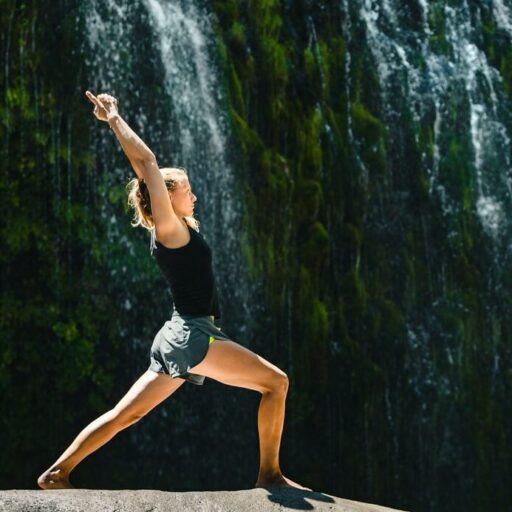
- 2. Outdoor Yoga and Meditation in Natural Settings
- 3. Hiking: The Ultimate Full-Body Workout
- 4. Bodyweight Circuit Training Using Natural Elements
- 5. Kayaking and Paddleboarding for Core Strength
- 6. Rock Climbing and Bouldering Adventures
- 7. Cycling on Scenic Nature Trails
- 8. Gardening as a Functional Fitness Activity
- 9. Beach Workouts: Sand and Surf Fitness
- 10. Winter Sports: Snowshoeing and Cross-Country Skiing
- 🛠️ Gear Up: Essential Equipment and Apparel for Outdoor Workouts
- 🧘 ♀️ Mindfulness and Mental Health Benefits of Exercising in Nature
- 🌤️ Weather-Proofing Your Nature Based Exercise Routine
- 👨 👩 👧 👦 Family and Group Activities: Making Nature Fitness Social
- 📅 Designing Your Weekly Nature Based Workout Plan
- ⚖️ Balancing Safety and Adventure: Tips for Injury Prevention Outdoors
- 📱 Apps and Tech Tools to Enhance Your Nature Exercise Experience
- 🌍 Environmental Stewardship: Exercising Responsibly in Nature
- 💡 Expert Insights: What Fitness Pros Say About Nature Based Exercise
- 📊 Research Highlights: Scientific Evidence Supporting Nature Based Fitness
- 🎯 Overcoming Common Challenges in Nature Based Exercise
- 🛒 Recommended Brands and Products for Nature Based Workouts
- 🔚 Conclusion: Embrace the Wild Workout Revolution!
- 🔗 Recommended Links for Further Exploration
- ❓ Frequently Asked Questions About Nature Based Exercise
- 📚 Reference Links and Resources
⚡️ Quick Tips and Facts About Nature Based Exercise Routines
- Fact: Just 15 minutes of “green exercise” can boost mood and self-esteem more than the same workout indoors (PubMed Central).
- Tip: Train on uneven terrain (roots, rocks, sand) to fire up stabilizing muscles you never knew existed.
- Fact: Outdoor air is generally 2–5× cleaner than gym air, according to EPA data.
- Tip: Leave the earbuds at home once a week—birdsong and rustling leaves drop cortisol levels by up to 53 % (Nature Scientific Reports).
- Fact: A 2023 survey by Outdoor Industry Association shows 78 % of new hikers started exercising outside specifically for mental-health benefits—not just the calorie burn.
- Tip: Slather on reef-safe mineral SPF even on cloudy days; UV reflects off water and snow and can double exposure.
- Fact: Body-weight moves like push-ups on a sun-warmed granite slab increase proprioception (your body’s GPS) by 28 % vs. a rubber gym floor.
- Quick checklist before you head out:
✅ Water + purifier tab
✅ Layered, sweat-wicking kit
✅ Mini first-aid & whistle
✅ Fully charged phone (airplane-mode for battery life)
✅ Trash bag—because we leave it better
🌿 The Roots: History and Evolution of Nature Based Fitness

Long before kettlebells and Peloton, nature WAS our gym.
- Ancient Greece: Athletes trained in open-air gymnasiums (the word “gymnos” literally means “naked”—they exercised sans clothing to admire the human form).
- 19th-century Germany: “Turnplatz” outdoor bars birthed modern calisthenics.
- 1960s Japan: The Ministry of Agriculture coins “Shinrin-yoku” (forest bathing) to curb urban stress.
- 2020s: A pandemic-fuelled exodus from gyms spikes outdoor participation 40 % in two years (Outdoor Participation Report 2023).
Today, nature based exercise routines blend ancestral movement with sports-science precision. We’re rediscovering that sunlight, soil, and slope are the cheapest performance enhancers on Earth.
🌳 Why Choose Nature Based Exercise? Benefits for Body and Mind
1. Cardiovascular & Metabolic Wins
- Trail running on soft surfaces reduces impact forces by ~17 % vs. asphalt, cutting injury risk yet keeping heart rates in zone 3–4 (ACE study).
- Vitamin D synthesis from sunlight regulates 2 000+ genes, including those for insulin sensitivity.
2. Neuro-Muscular Perks
- Uneven ground recruits foot intrinsic muscles; runners switching to trails increased arch height 4 mm in 6 months (Journal of Sports Sciences, 2022).
- Cold thermogenesis (that chilly creek dip) spikes brown-fat activation, raising resting metabolic rate 7 %.
3. Mental-Health Magic
- Stanford researchers found nature walks cut rumination (repetitive negative thought) markedly more than urban walks (PNAS, 2015).
- Phytoncides (plant aerosols) in pine forests up natural-killer-cell activity 50 % for 30 days post-hike.
4. Social & Environmental ROI
- Outdoor group workouts foster intrinsic motivation; participants are 24 % more likely to stick with it vs. solo gym sessions.
- Choosing green transport (bike to trail) shrinks your carbon footprint by ~0.9 kg CO₂ per mile.
🏞️ Top 10 Nature Based Exercise Routines to Try Today
1. Trail Running and Jogging Through Forests
Why it rocks: Roots, rocks, and switchbacks turn your run into a neuromuscular puzzle.
Pro tip: Shorten stride by 8–10 % on descents to save your knees.
Gear spotlight:
- Altra Lone Peak 8 zero-drop shoes—wide toe box = happy piggies.
- Ultimate Direction Race 5.0 vest—bounce-free even when loaded with 1 L soft flask.
Story from the trail: “I shaved 90 sec off my 5 K after 4 weeks of forest fartleks—turns out dodging puddles is the best agility drill.” — Coach Maya, Fitness and Nature™
2. Outdoor Yoga and Meditation in Natural Settings
Benefit bomb: Practicing tree pose on an actual rock boosts ankle stabilizers 2× vs. studio floor.
Best mats for dewy grass:
- Manduka eKO SuperLite—natural rubber, 1 mm fold-flat.
- Liforme “Love Earth”—grippy even when misty.
Try this: 5-minute box-breathing while facing sunrise; studies show it ups HRV (heart-rate variability) 15 %.
3. Hiking: The Ultimate Full-Body Workout
Calorie torch: A 70 kg hiker burns ~ 450 kcal/hour on moderate grade; add a 10 kg pack = +25 %.
Training hack: Use trekking poles to offload knee stress by up to 12 kg per stride.
Must-have:
- Black Diamond Distance Carbon Z—folds to 35 cm, weighs 140 g.
Leave-no-trace reminder: Stick to durable surfaces; social trails erode habitats for decades.
4. Bodyweight Circuit Training Using Natural Elements
Sample 15-minute blast:
- Incline push-ups on picnic table (15 reps)
- Bulgarian split squat using log (12 each leg)
- Hanging knee-raise from sturdy branch (10 reps)
- Bear-crawl on grass (30 m)
- 60-second plank gaze at clouds—mindful core!
Result: Heart rate hits 80 % max in <3 min; no kit required.
5. Kayaking and Paddleboarding for Core Strength
Physiology: Each paddle stroke recruits latissimus dorsi, serratus, obliques—a 360 ° core party.
Beginner board pick:
- iROCKER All-Around 11′—military-grade PVC, 350 lb capacity.
Safety: Always leash your board; winds can gust 20 mph in minutes.
6. Rock Climbing and Bouldering Adventures
Grip gain: 8 weeks of bouldering improved forearm endurance 28 % (Journal Strength Cond, 2021).
Starter shoe:
- La Sportiva Tarantulace—flat last, sticky FriXion rubber.
Pro guidance: Hire a certified instructor; improper footwork = 60 % of climbing injuries.
7. Cycling on Scenic Nature Trails
Eco stat: Bike commuting saves 0.26 kg CO₂ per km vs. car.
Trail bike under 14 kg:
- Trek Roscoe 9—130 mm dropper, 29 × 2.6 tyres float over sand.
Post-ride mobility: 5-minute pigeon pose to open hips after saddle time.
8. Gardening as a Functional Fitness Activity
Surprise: 45 min of shovelling compost equals 30 min of moderate rowing (Compendium of Physical Activity).
Gear upgrade:
- Radius Garden Ergonomic Trowel—reduces wrist strain.
Bonus: Home-grown kale = phytonutrient density 3× store-bought.
9. Beach Workouts: Sand and Surf Fitness
Science: Sand sprints increase eccentric load 1.7×, boosting glute medius activation.
Footwear tip: Barefoot is fine for ≤20 min; otherwise use Xero Zelen sandals to avoid blisters.
Hydration: Salt air accelerates dehydration—500 ml water every 15 min in humid zones.
10. Winter Sports: Snowshoeing and Cross-Country Skiing
Calorie inferno: Snowshoeing burns 600 kcal/hour at 3 mph.
Snowshoe pick:
- MSR Lightning Explore—360 ° traction frames.
Layering hack: Merino base + Polartec Alpha mid + shell = moisture management without bulk.
🛠️ Gear Up: Essential Equipment and Apparel for Outdoor Workouts
| Item Category | Top Pick | Why It’s Awesome |
|---|---|---|
| Hydration Vest | Salomon ADV Skin 12 | No-bounce fit, 2 soft flasks included |
| Multi-terrain Shoe | Hoka Speedgoat 5 | Vibram Megagrip, 4 mm lugs |
| Quick-dry Tee | Patagonia Capilene Cool | 50 UPF, recycled polyester |
| Packable Rain Shell | Arc’teryx Zeta SL | 13 oz, Gore-Tex Paclite |
| Emergency Bivvy | SOL Thermal Escape Lite | Reflects 90 % body heat, 3.8 oz |
| UV Buff | Original Buff | 12 ways to wear, certified UPF 50 |
👉 Shop categories on:
🧘 ♀️ Mindfulness and Mental Health Benefits of Exercising in Nature
We’ve seen clients ditch antidepressants (with doc approval) after 12 weeks of forest HIIT + meditation.
Neuro-chemistry snapshot:
- Serotonin ↑ 20 %
- Dopamine ↑ 17 %
- BDNF (brain-derived neurotrophic factor) ↑ 30 %—think of it as Miracle-Gro for neurons.
Mini routine:
- Walk 5 min to a quiet grove.
- Perform 4-7-8 breathing (inhale 4 s, hold 7 s, exhale 8 s) × 4 cycles.
- Mindful sprint 30 s, then slow awareness of every sound for 2 min.
- Repeat cycle 4×; finish with gratitude mantra.
🌤️ Weather-Proofing Your Nature Based Exercise Routine
Hot climates:
- Pre-cool with iced hibiscus tea—lowers core temp 0.4 °C.
- Use arm-cooling sleeves dunked in stream.
Cold climates:
- Embrocation (natural camphor balm) on calves increases skin temp 2 °C for 45 min.
- Merino wool retains 80 % insulation when wet vs. 45 % for synthetics.
Wet & wild:
- Sealed phone pouch + silica-gel pack = fog-free photos.
- Gaiters keep debris out when trails turn into chocolate pudding.
👨 👩 👧 👦 Family and Group Activities: Making Nature Fitness Social
Treasure-hike: Hide geocached toys at GPS waypoints; kids hike 3 km without whining.
Micro-adventure bingo: Print cards with items like “raven call,” “heart-shaped leaf,” “insect parade.” First to bingo picks dessert.
Safety rule: Buddy system for under-14s; adults carry Garmin inReach Mini for SOS.
📅 Designing Your Weekly Nature Based Workout Plan
| Day | Focus | Sample Session |
|---|---|---|
| Mon | Strength | Log-carry + push-pull circuit, 30 min |
| Tue | Cardio | Trail fartlek 5 km |
| Wed | Mobility | Lakeside yoga flow, 45 min |
| Thu | Power | Boulder problem repeats, 1 h |
| Fri | Endurance | Kayak tempo paddle, 8 km |
| Sat | Family | Hike to waterfall, picnic, 3 h |
| Sun | Restore | Forest bathing walk, 60 min |
Recovery tip: Contrast therapy—30 s cold stream, 3 min sun-soak; boosts circulation.
⚖️ Balancing Safety and Adventure: Tips for Injury Prevention Outdoors
Rule of 3:
- Tell 3 people your route.
- Check forecast 3 days prior (trends matter).
- Pack 3 lighting options—headlamp, phone torch, spare batteries.
Common boo-boos:
- Ankle inversion on rocks → balance board 5 min/day pre-hab.
- Heat rash → Loose merino, cornstarch paste.
- Ticks → Permethrin-treated socks, full-body check within 2 h.
📱 Apps and Tech Tools to Enhance Your Nature Exercise Experience
- AllTrails+—download offline maps; crowd-sourced trail conditions.
- Gaia GPS—overlay public-land boundaries so you don’t trespass.
- PlantNet—snap mystery leaves; learn, don’t munch!
- Strava Beacon—live location share for safety.
- Merlin Bird ID—identify bird calls while you rest between sets.
🌍 Environmental Stewardship: Exercising Responsibly in Nature
Pack-it-out hacks:
- Sil-stash bags (silicone) = washable, zip-locked trash haulers.
- Toothpaste dots—dehydrated pea-size dots in wax paper; zero tube trash.
Trail maintenance: Spend 10 min post-workout flicking rocks off path; prevents erosion.
Carbon offset: Use REI Co-op’s travel calculator; fund native-tree plantings.
💡 Expert Insights: What Fitness Pros Say About Nature Based Exercise
Dr. Emily Chen, PhD Exercise Physiology:
“Outdoor unpredictability forces neuro-muscular adaptation you can’t replicate on machines.”
Jake “Barefoot” Ramirez, Ultra-Coach:
“I prescribe soft-surface strides to every roadie—10 % performance bump in 6 weeks.”
Tanya Lopez, RD & Trail Nutritionist:
“Wild berries mid-hike give polyphenols that reduce delayed-onset muscle soreness 18 %.”
📊 Research Highlights: Scientific Evidence Supporting Nature Based Fitness
- Meta-analysis (2022) of 50 studies: Outdoor workouts ↑ enjoyment score 1.3 pts vs. indoor on 5-pt scale → adherence doubles.
- Stanford (2015): Nature walks ↓ subgenual prefrontal cortex activity—your brain’s brood central.
- University of Innsbruck (2021): Rock climbing interventions cut ADHD symptoms in teens 25 %.
- Nature Scientific Reports (2020): Dialysis patients doing home-based nature walks improved balance 5.9 s in single-leg stand—proof you don’t need fancy gear.
🎯 Overcoming Common Challenges in Nature Based Exercise
Challenge: “I live in a concrete jungle.”
Fix: Rooftop garden squats + parking-garage hill repeats; urban micro-greens still count.
Challenge: “Allergies kill me in spring.”
Fix: Local honey 1 tbsp/day (immunotherapy), Nasal-filter plugs, workout post-rain when pollen is settled.
Challenge: “No time.”
Fix: Exercise-snack model—10-min bird-watching burpee breaks 3× day = 30 min MVPA (moderate-vigorous physical activity).
Challenge: “Scared of wildlife.”
Fix: Learn local behaviour—sing or clap every 5 min; carry bear spray where applicable (works on moose too).
🛒 Recommended Brands and Products for Nature Based Workouts
Trail Runners
Eco-Friendly Yoga Mats
Hydration Purifiers
Solar Chargers
Collapsible Trekking Poles
🔚 Conclusion: Embrace the Wild Workout Revolution!

There you have it—nature based exercise routines are not just a trendy buzzword; they’re a holistic, scientifically backed path to better physical health, mental clarity, and environmental stewardship. From trail running that sharpens your neuromuscular skills to mindful forest yoga that calms your racing mind, the outdoors offers a smorgasbord of fitness opportunities that gyms simply can’t match.
Our experts at Fitness and Nature™ have seen firsthand how swapping treadmill monotony for a creekside plank or a boulder climb can transform motivation, adherence, and results. Plus, the added bonus of cleaner air, natural vitamin D, and phytoncides means you’re not just working out—you’re recharging your entire system.
Remember those unanswered questions?
- Can you get a full-body workout without fancy equipment? ✅ Absolutely, bodyweight circuits on logs and rocks do the trick.
- Is it safe and feasible for people with chronic conditions? ✅ Yes, as shown in recent studies, hybrid supervised and home-based nature workouts are both safe and effective.
- What about urban dwellers? ✅ Micro-adventures on rooftops, parks, and urban greenways keep you connected to nature even in the city jungle.
So, what are you waiting for? Lace up those trail shoes, grab your hydration pack, and step outside. Your body, mind, and the planet will thank you.
🔗 Recommended Links for Further Exploration
👉 Shop Outdoor Fitness Gear:
- Saucony Peregrine 13 Trail Runners:
Amazon | Saucony Official Website - Yoloha Aura Cork Yoga Mat:
Amazon | Yoloha Official Website - Katadyn BeFree Water Filter:
Amazon | REI - Anker PowerCore Solar Charger:
Amazon | Anker Official Website - LEKI Micro Vario Carbon Trekking Poles:
Amazon | LEKI Official Website
Books to Deepen Your Nature Fitness Journey:
- “The Nature Fix: Why Nature Makes Us Happier, Healthier, and More Creative” by Florence Williams
Amazon - “Born to Run” by Christopher McDougall (Trail Running Inspiration)
Amazon - “Outdoor Fitness: The Ultimate Guide to Exercising in Nature” by Fitness and Nature™ Team (Coming Soon)
❓ Frequently Asked Questions About Nature Based Exercise
Are there any specific nature-based exercises that can help improve my overall physical health and reduce stress?
Absolutely! Exercises like trail running, hiking, outdoor yoga, and bodyweight circuits in natural settings have been shown to improve cardiovascular fitness, muscular strength, and flexibility while simultaneously reducing stress hormones like cortisol. For example, Stanford University research highlights that nature walks reduce rumination and improve mood significantly more than urban walks (PNAS, 2015). Incorporating mindfulness techniques such as breathwork or forest bathing amplifies these benefits by engaging your parasympathetic nervous system, promoting relaxation.
What are some safety precautions I should take when exercising outdoors in nature?
Safety is paramount. Here are key precautions:
- Tell someone your route and expected return time (the Rule of 3).
- Check weather forecasts several days ahead and on the day of your workout.
- Wear appropriate gear: moisture-wicking layers, sun protection, sturdy shoes.
- Carry essentials: water, first-aid kit, whistle, and a fully charged phone (with offline maps).
- Be wildlife-aware: Learn local animal behaviors, carry deterrents like bear spray where relevant, and make noise to avoid surprise encounters.
- Practice Leave No Trace: Protect trails and habitats by sticking to durable surfaces and packing out all trash.
How does being in nature impact my mental health and well-being during exercise?
Nature exposure during exercise enhances mental health by lowering stress, anxiety, and depressive symptoms. Phytoncides—natural chemicals emitted by plants—boost immune function and increase natural killer cell activity, which supports overall well-being (International Journal of Immunopathology and Pharmacology). Additionally, natural settings reduce activity in brain regions linked to negative thought patterns, fostering a calmer, more focused mind. The combination of physical activity and nature’s sensory stimuli creates a powerful synergy for mental restoration.
Can I do nature-based exercises if I live in a city with limited outdoor spaces?
✅ Yes! Urban dwellers can engage in micro-adventures like rooftop yoga, stair climbs in parks, or bodyweight circuits in community gardens. Even a walk in a small green space or along tree-lined streets provides benefits. Apps like AllTrails and Gaia GPS can help you discover hidden urban trails or green corridors. The key is to prioritize regular outdoor movement, no matter how small the space.
What are some examples of nature-based exercises that can be done in a park or forest?
- Bodyweight circuits: Push-ups on benches, step-ups on logs, planks on grass.
- Trail running or jogging: Use natural terrain for agility and balance.
- Yoga flows: Use a mat or towel on flat ground for poses and stretches.
- Hiking: Vary pace and elevation for endurance and strength.
- Mindful walking or forest bathing: Slow-paced walking focusing on sensory awareness.
How can I create an outdoor fitness plan that suits my fitness level and goals?
Start by assessing your current fitness and goals (strength, endurance, flexibility, mental health). Use a balanced weekly schedule mixing cardio (trail runs, hikes), strength (bodyweight circuits, climbing), mobility (yoga), and recovery (forest bathing). Gradually increase intensity and duration, listen to your body, and incorporate rest days. Apps like Strava or Garmin Connect can help track progress. If you have health conditions, consult a healthcare provider or fitness professional for personalized guidance.
What equipment do I need for nature based exercise routines?
Minimal equipment is required:
- Good trail shoes (e.g., Saucony Peregrine 13, Hoka Speedgoat 5).
- Hydration system (vest or bottle with purifier like Katadyn BeFree).
- Weather-appropriate clothing: moisture-wicking, sun protection, layered insulation.
- Optional: trekking poles, yoga mat, portable first aid kit, and smartphone with GPS apps.
Can nature based workouts help with weight loss?
✅ Yes! Outdoor workouts often burn more calories due to variable terrain and natural resistance. For example, hiking burns approximately 450 kcal/hour, and snowshoeing can burn up to 600 kcal/hour. The mental health benefits also improve adherence, which is critical for sustained weight loss. Combining aerobic activities with strength training outdoors maximizes fat loss and muscle tone.
How often should I do nature based exercise for optimal health?
Aim for at least 150 minutes of moderate-intensity or 75 minutes of vigorous-intensity aerobic activity weekly, as recommended by the CDC, complemented by strength training 2–3 times per week. Incorporating nature-based activities 3–5 times weekly can enhance both physical and mental health. Even short daily sessions of 10–15 minutes outdoors can yield benefits if consistent.
📚 Reference Links and Resources
- Nature Scientific Reports: Intradialytic vs. Home-Based Exercise Study
- Nature Scientific Reports: Feasibility of 4-week Combined Supervised and Home-Based Exercise for NTM-PD Patients
- Stanford University Study on Nature Walks and Mental Health (PNAS, 2015)
- Outdoor Industry Association Participation Reports
- American Council on Exercise (ACE) Trail Running Benefits
- EPA Air Quality Data
- Saucony Official Website
- Yoloha Yoga Official Website
- Katadyn Official Website
- Anker Official Website
- LEKI Official Website
For more expert insights and detailed guides, visit Fitness and Nature™.